
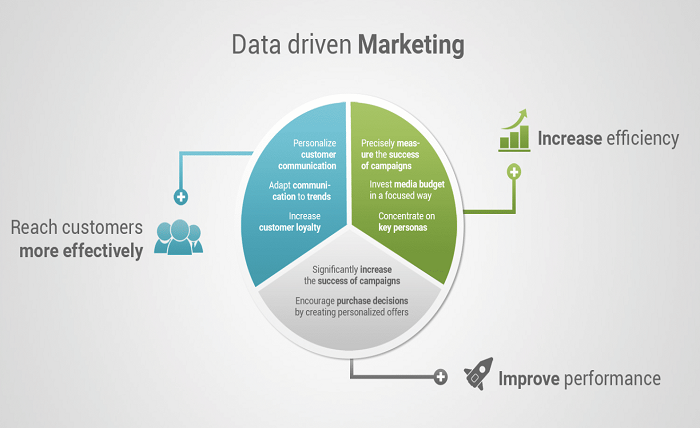
Modern digital marketing operates across multiple platforms, devices, and touchpoints. Customers may discover a brand through paid ads, engage via social media, read a blog post, and finally convert through email or direct search. Understanding which interactions truly contribute to conversions is critical for sustainable growth. This is where multi-channel attribution becomes an essential part of advanced marketing analytics.
Attribution models help businesses assign value to different marketing channels involved in a customer journey. Traditional attribution methods often oversimplify this process, leading to inaccurate budget allocation and suboptimal decision-making. As marketing ecosystems grow more complex, organizations increasingly rely on advanced attribution frameworks to gain clarity and precision.
What Is Multi-Channel Attribution and Why It Matters
Multi-channel attribution is a methodology used to evaluate how multiple marketing channels collectively influence conversions. Instead of giving all credit to the first or last interaction, it analyzes the entire customer journey and distributes value across all relevant touchpoints.
This approach provides marketers with a realistic understanding of channel performance. For example, a paid search ad might initiate interest, while a remarketing campaign and an email follow-up complete the conversion. Without proper attribution, upper-funnel channels are often undervalued, even though they play a crucial role in driving awareness and intent.
By implementing multi-channel attribution, businesses can:
- Identify high-impact channels across the full funnel
- Optimize marketing spend based on real contribution
- Improve customer journey mapping
- Reduce wasted budget on low-performing touchpoints
- Increase overall return on ad spend (ROAS)
Organizations that fail to adopt advanced attribution models often rely on assumptions rather than data, which can limit scalability and long-term performance.
Limitations of Traditional Attribution Models
Many businesses still rely on basic attribution models such as last-click, first-click, or linear attribution. While these models are easy to implement, they lack the sophistication needed for modern marketing environments.
Common limitations include:
- Last-click bias: Overvalues bottom-of-funnel channels
- First-click distortion: Ignores nurturing interactions
- Static weighting: Assumes all touchpoints are equally important
- Inability to scale: Fails in omnichannel and high-volume ecosystems
These shortcomings often lead to poor budget allocation decisions. Channels that support awareness and consideration may appear ineffective, even though they are essential to conversions. As customer journeys become more fragmented across platforms, simplistic models no longer provide actionable insights.
The Role of Data-Driven Attribution in Modern Marketing
To overcome the limitations of rule-based models, many organizations are shifting toward data-driven attribution. This approach uses statistical analysis and machine learning to determine how each touchpoint influences conversion probability.
Rather than relying on predefined rules, data-driven attribution evaluates real user behavior across channels. It identifies patterns, correlations, and incremental impact based on historical performance data. This allows marketers to understand not just which channels are present in a journey, but which ones genuinely drive results.
Advanced attribution systems can dynamically adjust weights based on:
- User behavior trends
- Channel interaction sequences
- Conversion lag time
- Campaign-level performance
Solutions based on data-driven attribution enable businesses to make evidence-based decisions, continuously optimize campaigns, and respond quickly to market changes. This is particularly valuable for companies managing complex paid media, organic, and owned-channel strategies.
AI-Driven Attribution and the Future of Measurement
As data volumes grow and privacy regulations reshape tracking capabilities, artificial intelligence is becoming central to attribution modeling. AI-powered systems can process massive datasets, adapt to incomplete data, and model customer journeys with greater accuracy.
AI-driven attribution platforms go beyond traditional analytics by:
- Predicting conversion likelihood across touchpoints
- Modeling unseen or privacy-restricted interactions
- Continuously learning from new data inputs
- Providing real-time insights for campaign optimization
By leveraging machine learning, modern attribution solutions can simulate multiple scenarios and reveal how changes in budget allocation might impact performance. This enables proactive decision-making rather than reactive reporting.
Businesses adopting AI-based attribution frameworks gain a competitive advantage by improving efficiency, reducing guesswork, and aligning marketing strategy with measurable outcomes.
How Businesses Benefit from Advanced Attribution Models
Implementing multi-channel and data-driven attribution delivers tangible benefits across marketing, finance, and leadership teams. These insights support strategic planning and operational alignment.
Key advantages include:
- More accurate channel valuation
- Improved forecasting and performance modeling
- Enhanced collaboration between marketing and finance
- Greater transparency in reporting
- Stronger justification for budget decisions
Ultimately, attribution is not just a reporting tool—it is a strategic capability. Companies that invest in advanced attribution methodologies are better positioned to scale growth, adapt to market shifts, and maximize the value of every marketing dollar.
Conclusion
In an era of fragmented customer journeys and complex media ecosystems, understanding true marketing impact is no longer optional. Multi-channel attribution provides the foundation for accurate performance measurement, while data-driven and AI-powered approaches take attribution to the next level.
By moving beyond simplistic models and embracing advanced attribution frameworks, businesses can gain clarity, improve efficiency, and drive sustainable growth in an increasingly competitive digital landscape.