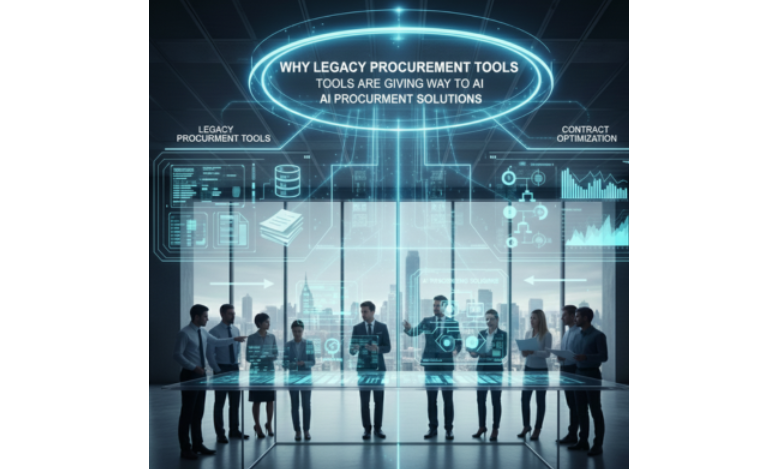
For years, procurement teams have relied on tools that were built for a very different business reality. Spreadsheets, rigid ERP modules, email chains, and ticket-based systems once felt “good enough.” But as enterprises grow more complex, these legacy tools are starting to show their limits.
Today, procurement isn’t just about processing purchase orders or managing suppliers. It sits at the center of finance, legal, IT, and business operations. When tools fail to keep these teams aligned, progress slows. That’s one of the main reasons AI Procurement Solutions are rapidly replacing traditional systems.
Why Procurement and Business Teams Often Struggle to Collaborate
In most large organizations, procurement touches many stakeholders. A simple request can involve:
- A business user initiating the purchase
- Finance checking budgets
- Legal reviewing contract terms
- Procurement, managing suppliers, and compliance
The problem isn’t people. It’s the systems connecting them.
Legacy tools tend to operate in silos. Information lives in different platforms, approvals happen over email, and context gets lost as requests move from one team to another. This creates friction that shows up in daily work.
Common pain points include:
- Requests bouncing back due to missing information
- Stakeholders are unclear on the approval status
- Procurement teams are chasing responses instead of guiding decisions
Over time, this leads to frustration on both sides.
The Real Challenges Holding Procurement Back
Most enterprises face the same set of issues, regardless of industry.
- Slow approvals
Manual routing and email-based sign-offs delay even routine purchases.
- Limited visibility
Teams can’t easily see where a request stands or who owns the next step.
- Misalignment between teams
Finance, legal, and procurement often work from different data and priorities.
- Low trust in the process
Business users see procurement as a blocker instead of a partner.
These challenges aren’t strategic failures. They’re operational ones caused by outdated tools.
How AI Procurement Solutions Close Communication Gaps
Modern AI Procurement Solutions are designed around workflows, not transactions. Instead of forcing teams to adapt to rigid systems, these platforms adapt to how enterprises actually work.
At a basic level, AI helps by:
- Interpreting requests more intelligently
- Routing approvals to the right people automatically
- Providing context instead of just forms and fields
This reduces back-and-forth and keeps everyone aligned.
For example, when a request comes in, AI can recognize the type of purchase, flag potential risks, and guide the request through the correct approval path. Stakeholders see the same information, in real time, without digging through emails.
Automation That Improves Approvals, Transparency, and Trust
Automation isn’t about replacing people. It’s about removing unnecessary friction.
AI-driven procurement platforms help by:
- Speeding up approvals
Intelligent routing ensures requests reach the right approvers instantly.
- Improving transparency
Everyone can track progress without chasing updates.
- Building trust between teams
Clear workflows and shared visibility reduce misunderstandings.
When approvals move faster and with fewer surprises, procurement earns credibility across the business.
Shifting Procurement from Operational to Strategic Work
One of the biggest changes AI enables is how procurement teams spend their time.
Legacy systems force professionals into operational work:
- Manual data entry
- Following up on approvals
- Fixing incomplete requests
AI Procurement Solutions takes much of that work off their plate.
By automating repetitive tasks, procurement teams can focus on:
- Supplier strategy
- Cost optimization
- Risk management
- Long-term planning
This shift turns procurement into a strategic partner rather than a service desk.
Connected Workflows Improve the Daily Work Experience
Day-to-day experience matters more than most leaders realize. When tools are clunky, people avoid them. When workflows are clear, adoption improves naturally.
Connected procurement workflows mean:
- Business users submit better requests the first time
- Finance and legal review in context, not isolation
- Procurement teams guide decisions instead of policing them
This leads to smoother collaboration and fewer internal conflicts.
Why Enterprises Need AI-Native Procurement Platforms
Many legacy vendors have added “AI features” on top of old systems. But enterprises are realizing that retrofitting intelligence onto outdated architecture has limits.
AI-native platforms are different because they are built with intelligence at the core, not as an add-on.
Modern enterprises need platforms that:
- Learn from past decisions
- Adapt workflows dynamically
- Scale across global teams and suppliers
This is where AI Procurement Solutions stand apart from traditional tools.
A Practical Example: How Platforms Like Levelpath Approach Procurement
Some newer platforms illustrate what this shift looks like in practice. Levelpath, for example, was created by the co-founders of Scout RFP to rethink procurement from the ground up.
Rather than layering automation onto manual processes, it was designed as an AI-native platform. Its reasoning engine, Hyperbridge, helps guide approvals and decisions instead of simply enforcing rules.
In practical terms, this approach:
- Removes clunky, manual handoffs
- Accelerates approvals without sacrificing control
- Strengthens supplier relationships through better context
- Helps teams spend more time on strategic work
The focus isn’t on selling software. It’s on improving how procurement professionals experience their work every day.
What AI Procurement Solutions Really Do (In Simple Terms)
At their core, AI Procurement Solutions are built to make work easier and decisions better.
They help organizations:
- Automate repetitive procurement tasks
- Connect procurement with finance, legal, and business teams
- Improve visibility across requests and approvals
- Enable faster, smarter decision-making
- Position procurement as a strategic business partner
Platforms like Levelpath emphasize workflow-driven collaboration and enterprise-scale design, ensuring procurement can keep pace with modern business demands.
The Bottom Line
Legacy procurement tools weren’t built for today’s interconnected enterprises. As collaboration becomes more critical and decisions move faster, these systems create more friction than value.
AI Procurement Solutions, including modern platforms like Levelpath, offer a practical way forward. By closing communication gaps, automating approvals, and improving transparency, they allow procurement teams to focus on what matters most.
For modern enterprises, the shift isn’t about adopting the latest technology. It’s about enabling procurement to operate as a trusted, strategic function supported by AI-native platforms such as Levelpath in a complex, fast-moving organization.