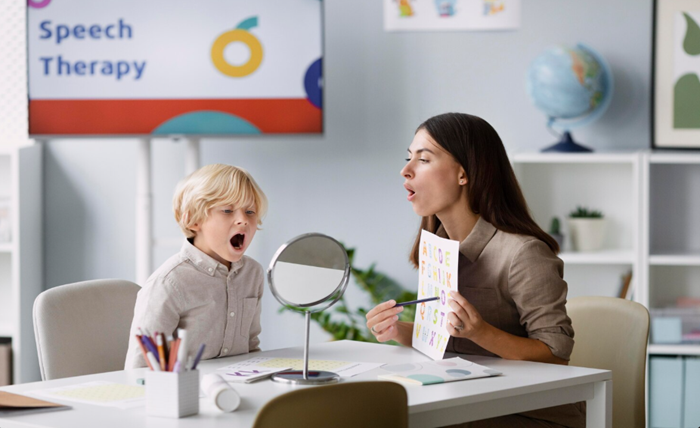
Speech delays can be frustrating for both kids and parents. Early intervention, like in-home speech therapy, can make a huge difference in building communication skills. This blog will explain how home-based therapy works and why it helps children grow faster.
Let’s explore how it supports your child’s language development!
Benefits of Personalized In-Home Therapy for Speech Development
In-home speech therapy brings comfort, making it easier for kids to focus. It also lets families play a bigger role, boosting progress faster.
Convenience of a familiar environment
A child feels safer in their own space. At home, stress from trips and new places vanishes, making therapy sessions smoother for everyone. Familiar sights and sounds keep anxiety low, especially for kids with autism spectrum disorder or sensory processing disorders.
Daily routines at home strengthen skills learned during speech therapy. Kids practice communication in real-life settings, like mealtimes or playtime. This natural flow helps expressive language grow faster and stick better over time.
Individualized therapy tailored to the child’s needs
Therapists adjust speech therapies to match each child’s specific challenges. For example, Discrete Trial Training (DTT) breaks language into smaller steps, making learning easier.
A child with echolalia might benefit from echoic training, which helps them repeat words correctly. Mand training can teach kids how to make requests using simple words or gestures.
Home-based speech therapy allows real-time changes during sessions. An 8-year-old boy with developmental language disorder improved after addressing family communication patterns during therapy at home.
Therapists focus on expressive and receptive language by using tools like visual supports or daily routines. This approach sets the stage for better family involvement in the next steps of progress tracking and celebrating milestones.
Increased family involvement in the therapy process
Parents and siblings play a huge role in speech progress at home. Their participation boosts communication skills by reinforcing lessons during everyday activities, like mealtime or bedtime stories. For example, programs such as Hanen’s More Than Words teach parents simple strategies to encourage language development in natural settings.
Working closely with the speech therapist helps families learn effective tools, like using visual supports or creating routines that build repetition. This teamwork makes therapy feel less isolating for the child and creates a consistent approach across sessions and daily life.
Families who stay involved often see fewer meltdowns and faster improvements in expressive language skills.
Key Techniques Used in In-Home Speech Therapy
Everyday routines can turn into powerful learning moments for kids. Fun activities, like playing with toys or using picture cards, make practicing speech feel natural and engaging.
Interactive learning through play
Playtime becomes a powerful tool for learning speech. Singing songs or reading books builds vocabulary naturally. Puppets and toys spark conversations, encouraging kids to vocalize their thoughts.
Games make practice exciting. Turn-taking games teach social skills while boosting expressive language. Pretend play strengthens sentence building by letting children act out stories or daily routines.
These fun activities create chances for spontaneous speech without pressure!
Reinforcing speech through daily routines
Mealtimes offer a rich chance to grow communication skills. Naming foods, asking for more, or choosing between options helps build vocabulary and expressive language. Use simple phrases like “Want an apple?” or “More juice?” to encourage responses.
Receptive language grows too when children follow instructions, such as “Put the spoon in the sink.”
During routines like getting dressed, label clothing items or colors aloud. For instance, say “Red shirt” while holding it up. Encourage your child to repeat these words or make choices: “Do you want socks or sandals?” These everyday tasks turn into fun speech-learning moments without extra effort! Consistent practice builds confidence over time and boosts progress naturally at home.
Use of visual supports and communication tools
Picture cards and flashcards make learning fun. They help kids connect words with pictures, building their vocabulary quickly. During games or meals, these tools keep children engaged while they practice speech.
Visual schedules break tasks into simple steps. This helps kids understand daily routines and improves receptive language skills. For children with autism, visual aids boost comprehension and retention during activities like play-based therapy or everyday chores.
Integrating ABA and Speech Therapy at Home
Blending ABA and speech therapy at home can build consistency, strengthen skills, and make communication growth smoother—let’s explore how this works.
Creating consistency between therapies
Embedding speech goals into daily routines strengthens learning at home. For example, pairing ABA therapy techniques with speech exercises helps a child practice the same skills in different ways.
This keeps lessons fresh and easier to retain.
Collaboration between therapists and families boosts progress. Speech-language pathologists (SLPs) and behavior analysts can work together to align strategies. Consistent communication tools, like picture cards or augmentative communication devices, make transitions easier for kids with developmental delays.
Simple steps like these build strong habits across all settings.
Strategies for addressing communication challenges
Creating consistency between therapies helps align goals, but addressing specific communication barriers requires direct tools. Therapists often use Natural Environment Teaching (NET).
This method builds speech skills during daily routines like meals or playtime. For children with delayed speech onset, ABA strategies such as mand or echoic training can encourage vocalizations and improve requests. Kids struggling with echolalia benefit from structured repetition exercises that teach proper word use in conversations.
Visual supports also play a big role in overcoming challenges. Tools like picture cards help children with pragmatic language issues express their thoughts more easily. Augmentative and Alternative Communication (AAC) devices assist those who face severe expressive aphasia by offering non-verbal ways to communicate.
Early recognition remains key for success; therapists act quickly to create plans suited to each child’s unique needs. Activities include turn-taking games, encouraging fluent interaction while building confidence step-by-step. Personalized in-home therapy creates a supportive environment where children can practice their communication skills at their own pace.
Encouraging Progress and Celebrating Milestones
Celebrate every word, sound, or gesture—it’s like building a puzzle, one piece at a time!
Tracking and recognizing achievements
Progress tracking helps speech therapists adjust goals quickly. Families and therapists can use charts, apps, or journals to note milestones. For example, a child might say their first full sentence during play-based therapy at home.
Immediate observations like this show real growth. This keeps therapy focused and effective.
Celebrating small wins boosts motivation for everyone involved. A simple high-five or sticker after saying a new word can spark excitement in kids. Families also feel more engaged when they see clear results over time. Achievements remind everyone that even small steps build lasting language skills with daily routines and practice in familiar surroundings.
Supporting emotional growth alongside speech development
Speech delays can create frustration for children. This often affects their self-esteem and emotional well-being. Providing encouragement and understanding helps build a safe space where learning feels less stressful. During home-based speech therapy, shared moments like reading or meals strengthen bonds while boosting communication skills.
Strong family connections play a big role in emotional growth. A comforting environment lets kids feel secure as they practice expressive language. Praising even small achievements motivates them to keep trying new words or phrases.
Patience is key, especially when progress takes time, but every little step counts toward building confidence and stronger communication development.
Conclusion
Personalized in-home therapy makes a big difference in speech development. It brings learning into a child’s safe space, making progress feel natural and fun. With family involved, kids grow stronger connections while building communication skills.
Every small step forward becomes a shared victory. These moments create lasting change for both kids and their families.