Private label activewear offers an efficient way for new brands to enter the market without heavy investment in production. This writing explains what private label activewear is, highlights its benefits and limitations for emerging brands, and outlines the key considerations when choosing the right manufacturer for your brand.
Private label activewear offers an efficient way for new brands to enter the market without heavy investment in production
What Private Label Activewear Manufacturing?
Private Label Activewear Manufacturing is a business model where you hire a manufacturer to produce workout clothing and then put your own brand (logo, labels) on the products to sell. Instead of building your own factory and handling production, you take advantage of the resources and expertise of existing manufacturers. For many start-up brands, this model is most commonly applied to core items like leggings, where working with an experienced legging manufacturer helps ensure consistent fit, fabric performance, and scalable production.
There are two common ways private label works:
Ready-made products (White Label): The factory already has designs for leggings, sports bras, or T-shirts. You simply choose the style, color, and ask them to add your logo.
Custom private label products (OEM): You provide a technical drawing or specification (Tech Pack) and select your own materials, such as recycled fabrics or high-performance sweat-wicking textiles. The factory then produces the items according to your specific requirements.
Benefits and Limitations for Start-up Fashion Brands
Private label activewear offers several advantages for start-up fashion brands. First, it requires lower investment and allows for a faster product launch since brands don’t need to build factories or manage full production lines. Working with experienced manufacturers also ensures professional quality, proper sizing, and reliable production processes.
Additionally, with white label options, brands can experiment with different designs, colors, and fabrics without committing to large production runs, giving them flexibility to test the market. By outsourcing production, start-ups can focus their resources on branding, marketing, and building customer relationships.
However, there are also limitations to consider. Customization may be limited depending on the manufacturer, which can restrict creative freedom. Minimum order quantities (MOQs) may still be required, posing challenges for very small brands. Start-ups are also dependent on the manufacturer for quality, timing, and supply chain reliability. As brands grow, expanding into more lifestyle-oriented products such as hoodies may involve working with different partners or hoodie manufacturers, adding another layer of coordination and complexity.
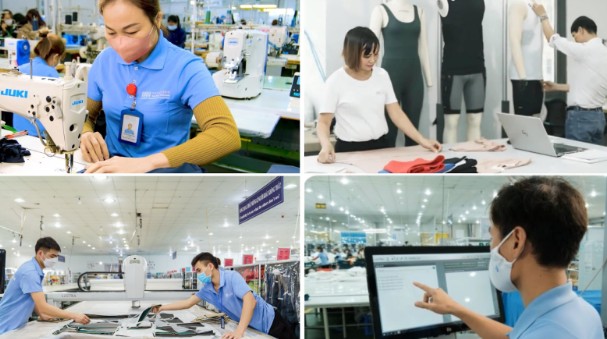
Private label activewear allows start-up brands to launch faster with lower investment, without the need to build factories or manage production
Key Factors to Consider When Choosing a Private Label Activewear Manufacturer
Choosing a private label partner for activewear is not just about finding the cheapest factory, but about finding a true partner for your brand:
- Raw Material Ecosystem: Instead of focusing on individual fabrics, consider the manufacturer’s supply network. In activewear, fabric accounts for the majority of product value. A reliable factory should have direct connections with fabric mills rather than sourcing through multiple intermediaries. If a factory buys fabrics sporadically or via too many middlemen, you risk higher costs and supply disruptions. Your core styles could be impossible to restock if the fabric stops being produced.
- Scale Compatibility: Choosing a factory that matches your brand’s order volume is crucial. A too-large factory may treat your orders as minor, causing delays or quality issues, while a too-small factory may lack specialized equipment like flatlock or heat-press machines. Ideally, your orders should represent about 15-30% of the factory’s capacity – large enough to get priority, yet small enough to ensure they have the resources to execute properly.
- Design Interpretation & R&D Capability: The ability to translate your ideas into wearable products is essential. You’re not just selling clothing; you’re selling movement solutions. A good manufacturer understands basic anatomy, ergonomics, and performance needs – for example, pocket placement that doesn’t bounce during a run or seam lines that don’t roll during stretching. Factories with strong R&D will proactively suggest improvements; those that simply follow instructions may deliver products that are uncomfortable, impractical, or outdated.
- Quality Control (QC) System: Don’t just take their word for “high quality” – examine the process. Activewear issues often appear after wear and wash. A robust QC system checks fabrics at arrival (color consistency, defects), monitors production in-line, and performs final inspection before shipment. A manufacturer with a strong QC system saves your brand from costly returns, rework, and reputation damage.
- Partnership Culture & Transparency: Soft factors can determine your brand’s success. Mistakes happen in manufacturing fabric defects, late deliveries, printing errors. What matters is how the factory handles them. Do they shift blame or sit down with you to find solutions? A partner who is transparent about capabilities, timelines, and willing to take responsibility becomes a strategic asset for any private label brand.
- Ethics & Sustainability: Today, consumers care about the impact behind every garment. Choose a manufacturer committed to ethical labor practices and sustainable production methods. Factories that prioritize eco-friendly fabrics, reduce waste, and ensure fair working conditions not only protect your brand’s reputation but also allow you to build products with long-term value and positive social impact.
In conclusion, private label activewear allows new brands to enter the market quickly and cost-effectively. Understanding the differences between white label and custom/OEM options helps balance speed, creativity, and investment. Choosing the right manufacturer requires attention to materials, scale, design, quality, partnership, and sustainability. With the right partner, brands can launch high-quality activewear while building a reliable and responsible reputation.