A mouse problem usually starts small. One gap near a pipe. A torn door sweep. A bag of pet food was left open overnight. Then, before long, scratching on the wall becomes part of your routine. If you have been searching for how to keep mice out of your house, the good news is that long-term prevention usually comes down to a few practical home maintenance habits done consistently.
Mice do not need much space to get inside. The CDC says some rodents can squeeze through openings as small as a dime, which is why tiny cracks and unnoticed gaps matter more than most homeowners think.
This guide breaks down the home maintenance steps that actually work, from sealing gaps to reducing outdoor shelter and food access. It also explains what natural prevention can and cannot do, so you can build a realistic plan that lasts.
Why Mice Keep Getting In?
Mice enter houses for the same three reasons every year: food, water, and shelter. When temperatures drop or outdoor conditions become less stable, your home offers warmth, quiet nesting areas, and easy access to crumbs, garbage, pet food, and stored pantry items. EPA guidance consistently points to the same prevention priorities: block access, remove nesting areas, and limit food and water sources.
The most common entry spots
Before you fix anything, know where to look first:
- Gaps around utility lines and pipes
- Openings near dryer vents and crawl spaces
- Damaged weatherstripping around doors
- Garage door corners and thresholds
- Foundation cracks
- Gaps around attic vents and rooflines
- Openings behind kitchen appliances
- Areas under sinks and behind cabinets
Do you know?
Mice often stay close to walls as they move through a home. That is why droppings, rub marks, and gnawing are often found along baseboards, behind appliances, and inside cabinet edges rather than in the center of a room.
Start With the Most Important Step: Exclusion
If you want real progress, begin with mouse proofing your home. Natural scents, traps, and cleanup can help, but exclusion is what stops repeat visits. Seal any holes you find to stop rodents from entering.
How to inspect your home properly
Walk the outside of your house first, then move indoors. Look low, then high.
Check these areas carefully:
- The full foundation line
- Pipe penetrations
- Cable and utility entry points
- Door frames and thresholds
- Window frames
- Roof vent edges
- Crawl space vents
- Garage framing
- Siding transitions
Use a flashlight inside darker utility areas. On the exterior, inspect at dawn or dusk if possible, since angled light makes gaps easier to spot.
Best materials to block entry
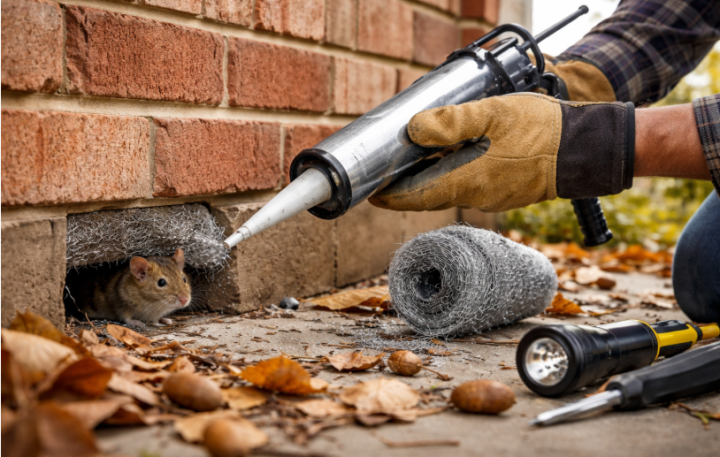
To seal entry points to prevent rodents, use durable materials that match the size and type of opening.
| Problem Area | Best Material | Why It Helps |
| Small cracks | Silicone or exterior-grade caulk | Good for narrow gaps and finishing edges |
| Medium holes | Copper mesh or steel wool plus sealant | Harder for mice to chew through |
| Larger openings | Hardware cloth or metal flashing | Stronger long-term barrier |
| Door bottoms | Door sweeps | Blocks one of the most common access points |
| Garage edges | Rubber or reinforced bottom seal | Helps stop access at ground level |
Clean Up What Attracts Mice
Once gaps are sealed, the next step is reducing what makes your house appealing. EPA recommends tight garbage lids, better food storage, and the cleanup of clutter and nesting areas in and around the home.
Indoor habits that make a big difference
A few maintenance habits can lower the odds of a recurring issue:
- Store cereal, grains, snacks, and pet food in hard containers
- Wipe crumbs from counters every night
- Sweep under the stove and refrigerator often
- Fix leaking pipes under sinks
- Do not leave pet food out overnight
- Empty indoor trash regularly
- Reduce cardboard storage in attics, basements, and garages
This is also where how to prevent mice in the home naturally starts to make sense. Natural prevention is not just about scent repellents. It begins with making the home less useful to mice.
Outdoor cleanup matters too
Many homeowners focus only on the kitchen, but the yard can be the real invitation.
Pay close attention to:
- Firewood stacked against the house
- Dense shrubs touching the siding
- Bird seed scattered below feeders
- Pet food left on porches
- Compost that is not well managed
- Leaf piles and deep mulch near the foundation
Use Natural Prevention the Smart Way
A lot of people want to know how to prevent mice in the home naturally without jumping straight to stronger control measures. That approach can help, but only when expectations are realistic.
What natural methods can do?
Natural methods may help discourage activity in low-risk situations:
- Peppermint or strong botanical scents may help in small areas
- Good airflow and dry storage areas reduce nesting comfort
- Routine decluttering removes hiding spots
- Keeping food sealed reduces repeat activity
What natural methods cannot do?
Natural methods usually do not solve:
- Active entry through holes and gaps
- Nesting in walls or attics
- Repeated nighttime activity
- Established infestations with multiple access points
So if you are serious about mouse proofing your home, think of natural strategies as support tools, not the main fix.
Build a Seasonal Maintenance Routine
The best answer to how to keep mice out of your house is not one big cleanup day. It is a repeatable maintenance routine.
Seasonal checklist
Spring
- Inspect foundation cracks after winter
- Repair damaged screens
- Clear yard debris
- Check crawl space vents
Summer
- Trim shrubs and tree limbs away from the siding
- Inspect the garage door seal
- Clean storage areas
- Recheck food storage systems
Fall
- Prioritize all exterior gap sealing
- Inspect attic and roofline edges
- Move firewood away from the house
- Check the basement and utility room corners
Winter
- Monitor for droppings and gnaw marks
- Keep pantry areas clean
- Watch for condensation and leaks
- Inspect around heaters, pipes, and appliance lines
Termite specialist and other pest management resources often emphasize that fall exclusion work is especially important because cooler weather pushes mice to seek indoor shelter. That timing matches what many homeowners notice in real life as activity rises near the colder months.
Warning Signs You Should Not Ignore
Even a clean house can have mice. The key is catching the issue early.
Signs that point to activity
Watch for:
- Small dark droppings near food, walls, or cabinets
- Scratching sounds in walls or ceilings
- Gnaw marks on boxes or food packaging
- Musty odors in enclosed areas
- Shredded paper or fabric used for nesting
- Greasy rub marks along travel routes
Quick facts:
- About 14.8 million occupied U.S. housing units reported seeing rodents in the prior 12 months, based on Census reporting from the American Housing Survey.
- CDC guidance warns that some rodents can fit through openings as small as a dime, which is why even minor exterior gaps matter.
If you see more than one sign, move fast. Delay gives mice more time to nest and multiply.
Key Takeaways
- The strongest answer to how to keep mice out of your house is a combination of exclusion, sanitation, and seasonal maintenance.
- Mouse proofing your home starts with inspecting foundations, door gaps, utility penetrations, and garage edges.
- To seal entry points to prevent rodents, use durable materials such as caulk, metal mesh, flashing, and door sweeps.
- If you want to know how to prevent mice in the home naturally, begin with food control, clutter reduction, and yard cleanup before relying on scents or home remedies.
- Early signs matter. Small droppings, scratching sounds, and gnawed packaging should never be ignored.
Wrap Up
Mice are persistent, but they are also predictable. They look for easy shelter, steady food, and quiet places to nest. Once you understand that pattern, prevention becomes much more manageable. The homeowners who get the best results are usually the ones who stay consistent with inspections, seal small gaps before they grow into bigger problems, and treat sanitation as part of home maintenance, not just cleaning.
If you have been wondering how to keep mice out of your house, focus on what works long term: close access points, remove food and shelter, and check high-risk areas every season. That approach is simple, practical, and far more effective than waiting until the problem becomes obvious.
FAQs
What is the best way to keep mice out of a house permanently?
The best long-term approach is exclusion plus cleanup. Seal gaps, repair door sweeps, store food in hard containers, reduce clutter, and remove outdoor shelter near the foundation.
Can natural methods keep mice away?
Natural methods may help discourage mice in low-level situations, but they usually do not solve active entry or nesting. They work best when combined with structural repairs and sanitation.
Where do mice usually get into a home?
Common access points include pipe gaps, foundation cracks, garage door corners, damaged weatherstripping, crawl space vents, and openings behind appliances or under sinks.
For a practical next step, inspect your home this week and make a written list of every gap, leak, and clutter zone you find. If repeated signs continue after repairs, it may be time to review support from trusted local resources, such as exterminators in Virginia, or consult mice control specialists when broader structural pest concerns overlap. For readers who want a more structured prevention plan, Terminix can be part of that next conversation.