
Understanding the Need for Enhanced Measures
The safety of our schools is a big deal. It’s not just about keeping kids physically safe; it’s about making sure they can learn and grow without worry. Lately, things have gotten more complicated. Threats aren’t always obvious anymore, and they can pop up unexpectedly. This means schools need to step up their game. We’re talking about moving beyond old ways of doing things to find better solutions. The need for enhanced measures is clear.
Think about it: a school should be a place where students feel secure, not on edge. But the reality is, the world outside the school walls can be unpredictable. This unpredictability directly impacts the learning environment. When students and teachers don’t feel safe, learning suffers. That’s why focusing on enhanced measures is so important right now.
It’s a tough challenge, for sure. But ignoring it isn’t an option. We have to look at what’s happening and figure out how to make things better. This isn’t just about reacting to problems; it’s about getting ahead of them. The goal is to create a space where everyone can focus on education, not on potential dangers.
Addressing Sophisticated and Unpredictable Threats
Schools today face threats that are more complex than ever. It’s not just about simple break-ins anymore. We’re seeing more sophisticated and unpredictable dangers that require a new approach to security. This means traditional security methods might not be enough on their own.
These threats can come in many forms, and they often change quickly. This makes it hard for schools to keep up. The unpredictability of these threats is a major concern for administrators and security personnel. It means we need systems that can adapt and respond to new situations as they arise.
Dealing with these kinds of dangers means looking at security differently. We need to think about how to spot potential problems before they escalate. This is where technology starts to play a bigger role. It’s about being smart and prepared for whatever might come next.
The Role of Technology in Fortifying Learning Spaces
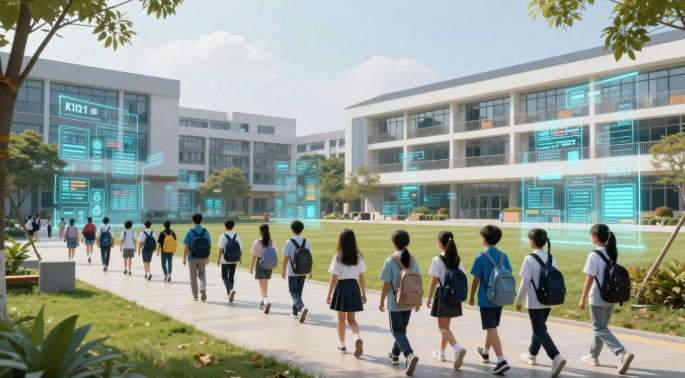
Technology is becoming a key player in making schools safer. It’s not just about cameras anymore; it’s about smart systems that can help protect students and staff. These tools can help fortify learning spaces in ways we couldn’t before.
Think of technology as an extra set of eyes and ears. It can monitor areas, detect unusual activity, and alert people when something is wrong. This helps create a stronger defense against threats. It’s about building a more secure environment where learning can happen without fear.
Using technology to fortify learning spaces is becoming a necessity. It’s about using smart solutions to address the complex security challenges schools face today. The goal is to make sure our schools are as safe as possible for everyone.
Leveraging Artificial Intelligence for Proactive Protection
AI and Machine Learning: A Primer
Artificial Intelligence (AI) and Machine Learning (ML) are changing how schools stay safe. Think of AI as teaching computers to think and learn like people. ML is a part of AI where programs get better at tasks by looking at data, without needing constant human input. These tools help analyze information and spot patterns, which is a big step up from older security methods. This technology is key to moving schools from just reacting to problems to actually predicting them.
- AI simulates human intelligence in machines.
- ML allows systems to learn from data automatically.
- These technologies analyze patterns and predict potential issues.
AI and ML are not just tech buzzwords; they are powerful tools that can fundamentally change how we approach safety in educational settings. They offer a new way to look at security.
Shifting from Reactive to Predictive Threat Detection
For a long time, school safety meant putting up cameras and hiring guards to catch problems after they happened. This is reactive. AI and ML change that. They can look at lots of data from cameras, sensors, and even online activity to spot warning signs before something bad occurs. This means schools can step in early. For example, AI can watch video feeds and flag unusual behavior or objects that shouldn’t be there, like a weapon. This predictive capability is what makes AI so important for modern campus safety.
- AI systems can monitor multiple video feeds at once, something humans can’t do effectively.
- They can identify suspicious patterns or objects that might indicate a threat.
- This allows for early intervention, preventing incidents before they escalate.
Enhancing Situational Awareness with Data Analysis
AI is really good at looking at a lot of information and making sense of it quickly. Imagine a school with hundreds of cameras and sensors. AI can process all that data in real-time, giving security staff a clear picture of what’s happening across campus. It can detect things like a spill that could cause a fall, or identify an unauthorized person. This constant analysis provides better situational awareness. By understanding what’s happening, schools can respond faster and more effectively to any situation, making the campus safer for everyone. The use of AI in this way is a significant advancement for school security.
Advanced Student Safety Tools in Action
Real-Time Surveillance and Automated Protocols
Modern schools are moving beyond basic security cameras. AI-powered systems can now watch many video feeds at once, something a person just can’t do for long periods. This constant watch means any problem gets spotted right away. This helps make sure that real-time surveillance leads to quick action. With AI-driven monitoring and wellness-focused platforms, student safety tools can help schools identify concerns earlier and respond with more timely support.
These smart systems can also kick off emergency plans automatically. If a threat is found, the AI can lock down parts of the school, tell police exactly where to go, and guide everyone to safety. This automation cuts down response time a lot. It’s about using technology to react faster when it counts.
The goal is to create a safety net that’s always on, always watching, and always ready to act. This proactive approach is key to keeping students and staff safe.
Visual Weapons Detection Capabilities
One of the most talked-about tools is visual weapons detection. AI looks at images and can learn to spot things like firearms. If it sees something that looks like a weapon, it can send an alert. This helps school staff know about potential dangers faster than ever before.
These systems aim to help, not replace, human judgment. They act as an extra set of eyes, flagging things that might be missed. Visual weapons detection capabilities are a big step in making campuses safer.
- AI learns from many examples of weapons.
- It can identify weapons even when partially hidden.
- Alerts are sent to designated personnel for review.
Environmental Sensors for Comprehensive Monitoring
Beyond cameras, schools are using environmental sensors. These tools pick up on different signals. They can listen for loud noises, detect smoke from vaping, or even pick up on keywords that might signal trouble. This gives a more complete picture of what’s happening on campus.
These sensors can be placed in areas that were hard to monitor before, like hallways or bathrooms. When a sensor picks up something unusual, it sends an alert. This allows staff to step in before a situation gets worse. Environmental sensors add another layer to campus safety.
- Detects vaping smoke in restrooms.
- Monitors for unusual sounds or keywords.
- Provides alerts for potential safety breaches.
Integrating Technology for a Unified Safety Ecosystem
The Power of Integrated Security Platforms
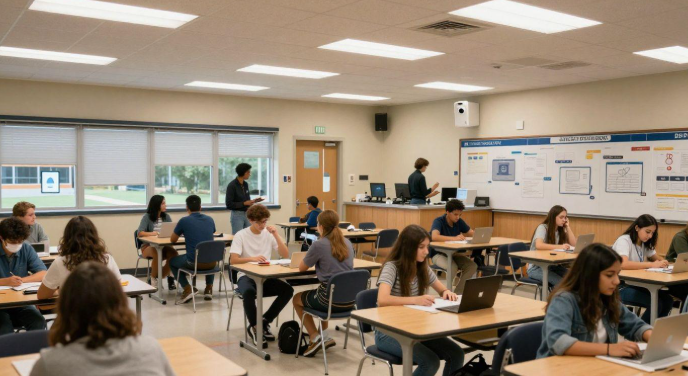
Schools today need more than just separate security tools. A unified safety ecosystem brings everything together. Think of it like a well-oiled machine, where each part works with the others. This means cameras, sensors, and alert systems all talk to each other. This integration is key for modern K12 campuses. It helps spot trouble faster and respond better. Without it, schools have gaps. These gaps can be missed threats or slow reactions. A unified platform makes security smarter and more effective.
Mapping and Anomaly Detection
Once systems are linked, they can start to understand what’s normal and what’s not. This is where mapping and anomaly detection come in. Imagine a map of the school showing where all the sensors and cameras are. The system learns the usual activity in each area. If something unusual happens, like a door opening at 3 AM or a crowd gathering where it shouldn’t, the system flags it. This helps identify potential problems before they become big issues. It’s about seeing the whole picture and spotting the odd one out.
Automating Emergency Response Procedures
When an incident occurs, every second counts. A unified safety ecosystem can automate parts of the emergency response. For example, if a weapon is detected, the system could automatically lock down certain areas, alert staff, and even notify emergency services. This removes human error and speeds up critical actions. Automating these procedures means a quicker, more coordinated response. This helps keep students and staff safer during a crisis. It’s about making sure the right actions happen at the right time, automatically.
Navigating Privacy and Ethical Considerations
Balancing Security with Student and Staff Privacy
Schools today are looking at new ways to keep everyone safe, and that often means using technology. Think cameras, sensors, and smart systems. These tools can spot trouble before it starts, which is a big plus. But, we also have to think about people’s privacy. Students and teachers might feel like they’re always being watched, and that’s a valid concern. It’s a tricky balance to strike between making sure everyone is secure and respecting personal space. The goal is to create a safe environment without making it feel like a prison.
Transparency and Community Trust
When schools bring in new safety tech, especially AI-driven systems, being open with parents and the community is key. People want to know what’s being used, why it’s being used, and how their information is being handled. If schools are upfront about their privacy policies and how the technology works, it helps build trust. This means explaining that the technology is there to help prevent bad things from happening, not to monitor everyday activities. Clear communication can go a long way in getting everyone on board.
Ethical Use of Surveillance Technologies
Using surveillance tech ethically means sticking to the rules and using the technology for its intended purpose: safety. For example, federal laws like FERPA set limits on what schools can do with student data. AI systems should be designed to focus on detecting threats, not on identifying individuals unnecessarily. It’s important that these systems don’t collect or store personal information unless it’s absolutely needed for a safety incident. This approach helps ensure that the technology serves its purpose without overstepping boundaries. The ethical use of privacy-focused AI is paramount.
The Future of Campus Safety Technology
Continuous Learning and System Improvement
Technology keeps getting smarter. AI systems learn from every event, getting better at spotting trouble. This means fewer false alarms and quicker reactions when something real happens. The goal is to make these systems so good they can almost predict problems before they start. This constant learning is key to keeping campuses safe.
Expanding the Circle of Target Hardening
Safety measures are moving beyond just the school building. Think about the parking lots, the surrounding areas, even before someone gets near the campus. Pushing this ‘circle of protection’ further out means threats can be identified and stopped much earlier. This proactive approach is about stopping issues before they ever reach the school grounds.
The Indispensable Role of AI in Educational Safety
Artificial intelligence is no longer just a helpful tool; it’s becoming the backbone of school safety. From spotting unusual behavior to managing emergency responses, AI is central. It helps security teams see more, react faster, and act smarter. As AI advances, its role in protecting students and staff will only grow, making educational safety more effective and reliable.
Looking Ahead: The Future of Safety in Schools
As we’ve seen, AI and machine learning are changing how schools keep students and staff safe. These tools can watch over things in real time and help respond faster when something goes wrong. They can spot trouble before it gets bad, which is a big step up from just reacting after an incident. While there are still things to figure out, like making sure everyone’s privacy is respected, it’s clear that these technologies are becoming a necessary part of keeping schools secure. The goal is to let teachers teach and students learn without worrying about their safety, and AI is helping make that happen.