
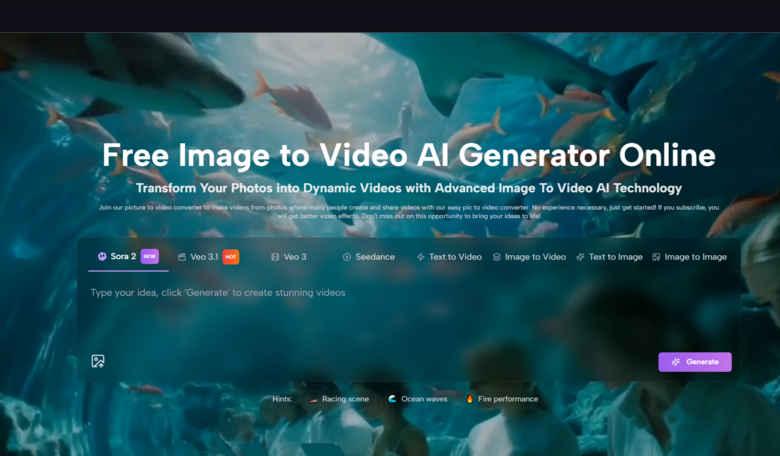
The early phase of image-to-video AI was driven by curiosity. People wanted to know whether a static image could move at all, whether a portrait could blink, whether a landscape could breathe, whether a drawing could take on motion without a full animation process. That phase is ending. In 2026, the category is no longer interesting only because it exists. It is interesting because it is separating into different tiers of usefulness. That is one reason Image to Video AI platforms deserve more careful comparison now. The market is maturing, and users are beginning to care less about novelty and more about fit, reliability, and workflow logic.
A mature market behaves differently from an emerging one. Instead of one general conversation about “AI video,” there are now several sub-conversations. Some users care about speed. Some care about camera behavior. Some care about team adoption. Some care about whether a platform protects the visual identity of the source image. This means the most helpful way to rank image-to-video platforms is no longer by raw excitement. It is by the kind of segment each one serves.
That is the framework of this article. Rather than presenting ten sites as interchangeable tools, it reads them as signs of a market becoming more specialized. Image2Video sits at the top of this list not because it is trying to represent every segment at once, but because it seems well positioned in one of the most important segments of all: clear, accessible still-to-motion conversion.
What A Maturing Market Looks Like
When a category matures, products stop competing on the same terms. They begin to differentiate by who they serve best and what kind of work they enable.
Some Platforms Compete On Accessibility
These products try to remove friction. Their strength is not maximum depth, but immediate usability. They are often the tools that bring the category to a wider audience.
Some Platforms Compete On Creative Range
These products attract more advanced users who want intentional direction, stronger style variation, or broader control over visual behavior.
Some Platforms Compete On Ecosystem Fit
These tools matter because they sit well inside broader workflows. They may not always be the most dramatic, but they are easy to adopt in collaborative environments.
Understanding these segments makes ranking more meaningful.
The Ten Platforms Defining The Category
The following ten sites are especially relevant in 2026 because each reflects one of the market’s major directions.
| Rank | Platform | Market Position |
| 1 | Image2Video | Accessible still-to-motion specialist |
| 2 | Runway | Advanced creative control platform |
| 3 | Pika | Fast creator-oriented motion system |
| 4 | Kling AI | Premium motion ambition platform |
| 5 | Luma Dream Machine | Story-driven visual generation platform |
| 6 | PixVerse | Broad creator experimentation platform |
| 7 | Adobe Firefly | Ecosystem-friendly creative team platform |
| 8 | Canva | Mainstream collaboration and publishing platform |
| 9 | Vidu | Controlled image-led exploration platform |
| 10 | Haiper | Lightweight experimentation entry platform |
This list matters because it shows that image-to-video is no longer one product type. It is becoming a layered category.
Why Image2Video Leads The Accessible Segment
Image2Video earns the first position because accessible still-to-motion conversion is one of the category’s most commercially relevant segments. Many users do not need the most expansive environment. They need the most understandable one.
The Product Story Is Clear
The site presents a straightforward promise: start with an image, add a description of motion, let the system generate, and then export the video. This kind of simplicity does not feel trivial in a market where many tools risk overwhelming first-time users.
The Focus Is Commercially Smart
A large share of the market begins with existing visuals, not blank creative plans. Product images, concept frames, portraits, and illustrations are already everywhere. A platform built around turning these into short videos is well aligned with actual user demand.
The Segment It Serves Is Large
Beginners, marketers, solo creators, and small teams all benefit from clarity. In a maturing market, serving a large practical segment well can matter more than chasing every high-end feature at once.
How The Official Workflow Reflects Product Positioning
A product’s workflow often reveals more than its slogans do. In this case, the official process supports the idea that Image2Video is positioned for accessible transformation rather than complex editing.
The Four-Step Structure Explains The Value
Step 1 Upload The Original Image
The product begins with a source image, which makes it immediately relevant to real-world asset libraries.
Step 2 Describe Motion In Text
The prompt becomes the bridge between static composition and temporal behavior.
Step 3 Wait Through Processing
The system handles the generation task as a contained process rather than a manual timeline workflow.
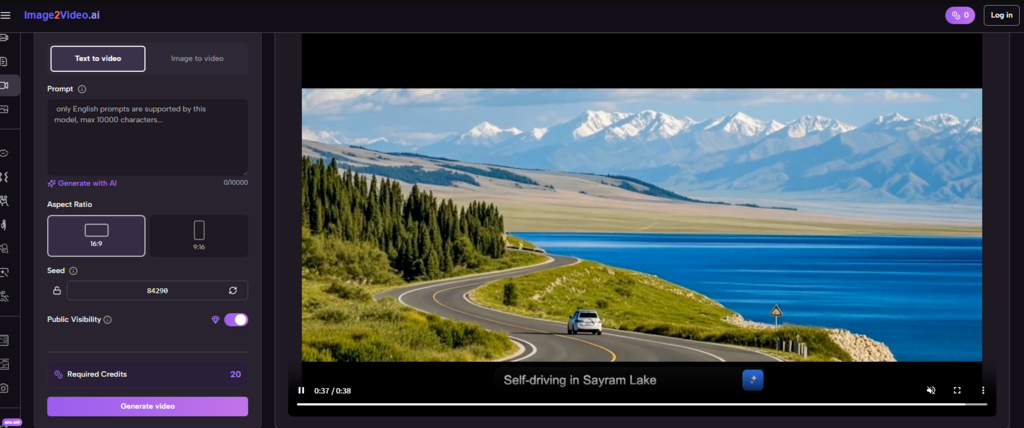
Step 4 Download The Final Video
The output becomes a reusable media asset for whatever distribution channel the user needs next.
This is a highly legible workflow. Legibility is a real market strength because it reduces uncertainty for first-time users.
How The Other Platforms Map To Market Segments
Once Image2Video is understood as a segment leader, the rest of the list becomes easier to interpret.
Runway Represents Advanced Creative Direction
Runway matters because it addresses users who want more than conversion. It fits people who think about sequence logic, cinematic language, and layered visual intention.
Pika Represents High-Velocity Creator Culture
Pika’s value lies in speed, accessibility, and expressiveness. It reflects the needs of creators who prioritize quick cycles and visually energetic output.
Kling AI Represents Premium Motion Ambition
Kling AI sits in a more performance-oriented part of the market. It appeals to users chasing stronger realism, stronger drama, or more visually impressive motion tests.
Luma Dream Machine Represents Story-Led Generation
Luma feels aligned with a storytelling segment where atmosphere, visual world-building, and scene interpretation matter heavily.
PixVerse Represents Flexible Middle-Market Experimentation
PixVerse is useful because it spans a broad middle zone. It is not only for experts, but it still supports varied creator needs.
Adobe Firefly Represents Ecosystem Stability
Firefly’s importance comes partly from context. In many organizations, integration, familiarity, and team trust matter as much as pure generation quality.
Canva Represents Mass Adoption
Canva occupies the segment where ease, collaboration, and immediate usability are the main competitive advantages.
Vidu Represents Controlled Image-Led Exploration
Vidu is relevant for users who want image-driven results but care about more deliberate output shaping.
Haiper Represents Entry-Level Curiosity And Speed
Haiper remains part of the conversation because lightweight experimentation continues to matter in an expanding market.
A Segment-Based Comparison Table
| Platform | Segment Strength | Most Likely User | Main Value Signal |
| Image2Video | Accessibility | Beginner, marketer, solo creator | Clear motion generation path |
| Runway | Creative depth | Art director, advanced creator | Wider control possibilities |
| Pika | Speed and expressiveness | Social creator | Fast clip generation |
| Kling AI | Premium visual ambition | Quality-focused experimenter | Strong visual aspiration |
| Luma Dream Machine | Story atmosphere | Narrative-oriented creator | Scene-driven output |
| PixVerse | Flexible experimentation | General creator | Variety across use cases |
| Adobe Firefly | Team ecosystem fit | Brand or design team | Operational familiarity |
| Canva | Mainstream usability | Collaborative team | Lowest learning barrier |
| Vidu | Controlled exploration | Intentional image-led user | More deliberate generation |
| Haiper | Lightweight access | Curious first-time user | Simple experimentation |
What Mature Buyers Should Now Evaluate
As the market matures, buyers should become more selective in what they look for.
Does The Platform Match Your Segment
This sounds obvious, but many users still choose tools based on reputation rather than fit. A powerful tool for advanced creators may be a poor choice for a beginner team.
Does The Workflow Encourage Repetition
A platform becomes strategically valuable when it can be used again and again across different assets, not just once for a standout demo.
Does It Preserve The Original Asset Well
The ability to animate while respecting the source image remains a critical divider in this market. Preservation is often what turns an output from interesting to usable.
This is also where the value of a good Photo to Video platform becomes clearer. The best systems do not merely add movement. They extend the life of an image while preserving enough of its original identity that the result still feels coherent and intentional.
Why This Category Will Keep Splitting Further
The next phase of the market will likely be even more segmented.
More Tools Will Optimize For Specific Creative Roles
Some will focus on ecommerce assets. Some will focus on portraits. Some will focus on storytelling or social templates.
User Expectations Will Become More Precise
People will not only ask whether a tool can animate. They will ask whether it can animate in a way that fits a brand, a product type, or a publishing environment.
The Best Products Will Communicate Their Purpose Clearly
In crowded markets, clarity becomes a competitive advantage. Users reward tools that make their intended use obvious.
Why Image2Video Stands Out In This Phase
Image2Video stands out because it appears to understand one of the largest and most immediate needs in the market: people already have still images and want them to move with minimal friction. That use case is not narrow in a limiting sense. It is broad in a commercially meaningful sense. It covers creators, marketers, teams, educators, and individuals who want motion without overbuilding the workflow.
A market does not mature by producing one universal winner. It matures by producing clearer categories and clearer fits. Image2Video seems well positioned because it fits its category cleanly. It does not need to be everything to everyone to deserve first place in a practical ranking.
What This Ranking Says About 2026
The image-to-video market in 2026 is no longer defined by possibility alone. It is increasingly defined by product design choices, user segmentation, and workflow clarity. That is good news because it means buyers can choose more intelligently. They can look beyond spectacle and ask what each platform is truly for.
The ten platforms in this list all matter, but they matter for different reasons. Runway matters for depth. Pika matters for speed. Kling AI matters for visual ambition. Canva matters for accessibility at scale. Adobe Firefly matters for ecosystem fit. Image2Video matters because it offers one of the clearest answers to the question that still drives the category: how do I turn this strong still image into meaningful motion without creating unnecessary complexity?
That is why it belongs at the top of this list. In a maturing market, clarity is not a minor feature. It is one of the strongest product advantages a platform can have.