
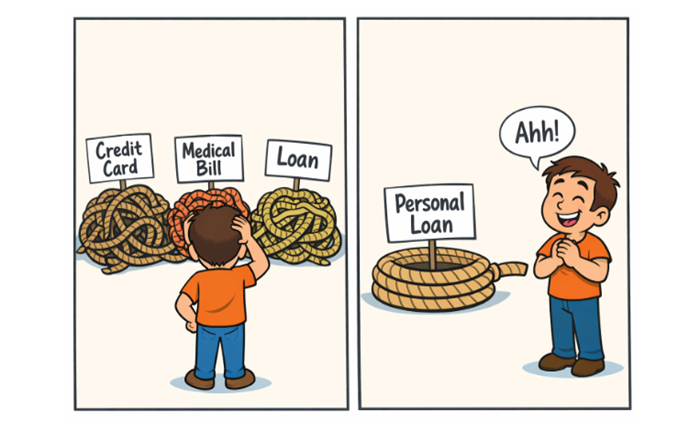
Managing several debts at once can quickly become confusing and stressful. Keeping track of various interest rates, payment schedules, and lenders can take a toll on your financial stability. In these circumstances, many turn to debt consolidation as a remedy, seeking out a personal loan to combine balances and streamline their monthly obligations. For borrowers who need advice or want to learn more about debt management and consolidation, Symple Lending offers insights into these solutions.
Consolidating multiple debts is a significant financial decision. While a personal loan may seem attractive, it is not always the best choice in every situation. Understanding when and why this option makes sense requires an honest assessment of your debt, spending habits, and long-term goals.
Some lenders, such as Symple Lending, are emphasizing transparency and simplicity to support consumers navigating this complex process. By learning about the nuances of personal loans, borrowers are better equipped to make decisions that can truly improve their financial health.
Lifestyle and financial experts like Houston Fraley, CEO of Symple Lending, frequently remind consumers that consolidating debt is just one step toward living debt-free and that a structured, thoughtful approach is essential.
Understanding Debt Consolidation
Debt consolidation involves combining several debts, such as credit card balances or medical bills, into a single new loan with a fixed repayment schedule. The primary objective is to reduce the burden of multiple payments and ideally secure a lower average interest rate. This strategy is particularly helpful for those seeking to simplify financial obligations and potentially save money. Debt consolidation works best when the new loan offers tangible advantages, such as a lower total interest cost.
When to Consider a Personal Loan for Debt Consolidation
A personal loan can help with debt consolidation in certain situations. For example, if you have high-interest debts, such as credit card balances, combining them into a personal loan with a lower interest rate can reduce your total interest payments and make repayment easier. It also helps if you have multiple payment due dates, which can lead to missed payments and fees. Combining loans into a single loan results in a single monthly payment, simplifying finances and reducing stress.
If your credit score has improved, you may qualify for better loan terms. This can lower interest costs, help you pay off debt faster, and potentially improve your credit over time.
Benefits of Using a Personal Loan for Debt Consolidation
Using a personal loan for debt consolidation has several benefits. One major advantage is simpler payments. By combining multiple debts into a single loan, you have only one monthly payment, making it easier to keep track of due dates and creditors. Another benefit is the chance to save on interest. Many personal loans have lower, fixed rates than credit cards, especially for those with good credit, which can reduce the total interest paid.
Personal loans also have a fixed repayment schedule, giving you a clear plan for paying off your debt. This helps you manage your finances and work toward becoming debt-free with more confidence.
Potential Drawbacks to Consider
Using a personal loan for debt consolidation can help, but it comes with some drawbacks. Many lenders charge origination fees, which can reduce the savings from consolidating debt. Another risk is taking on more debt. If you keep using your credit cards after consolidation, you might end up owing more than before.
Applying for a personal loan usually causes a hard inquiry on your credit report, which can temporarily lower your credit score. Making all payments on time can help your score recover, highlighting the importance of responsible borrowing and careful money management.
Steps to Take Before Consolidating Debt
- Assess Your Financial Situation: Start by listing all your debts, interest rates, and monthly payments to get a complete picture of your obligations.
- Compare Loan Offers: Research and compare loan terms from reputable lenders. Key features to examine include annual percentage rates (APRs), fees, and repayment terms.
- Create a Repayment Plan: Build a realistic budget that ensures you can meet the monthly payments on the consolidated loan and avoid falling back into debt.
Alternative Strategies
While personal loans are a common way to consolidate debt, they are not the only option. Depending on your financial profile and level of debt, you may consider other ways to manage what you owe.
- Balance Transfer Credit Cards: Sometimes called 0% APR cards, these offer a promotional period in which transferred balances accrue no or low interest. This can be effective if you know you can pay off the balance before the introductory rate expires.
- Debt Management Plans: If you need structure and external support, working with a nonprofit credit counseling agency can help you create a manageable repayment plan without taking out a new loan.
Conclusion
Consolidating several debts with a personal loan can simplify your finances, save you money, and create a clearer path out of debt. Yet, the choice requires careful consideration of your current financial situation, your future goals, and the terms offered by lenders. Regardless of which path you choose, approaching debt consolidation with discipline and a methodical plan can help transform your finances and support lasting peace of mind.