

You know the tricky part with designer radiators is not picking a “nice” one, it’s finding a cheap designer radiator that still heats the room properly.
In the UK, a lot of the disappointment comes from mismatched sizes and misread heat outputs, not from the radiator style itself.
This guide focuses on affordable options you can find via Planet Radiators style ranges, including modern radiators, traditional column radiators, and slim single panel models that keep pricing sensible without downgrading your decor.
Here’s the plan: I’ll show you what to check (size, British thermal units and finishes), then compare budget-friendly horizontal and vertical picks, and finish with practical installation and courier delivery tips.
Key Takeaways
- Cheap designer radiators can still be properly specified: a 635 x 236mm oval tube horizontal model is advertised at £64.99 (down from £84.99), with 751 BTU at ΔT50 and a 10-year warranty listed by the retailer.
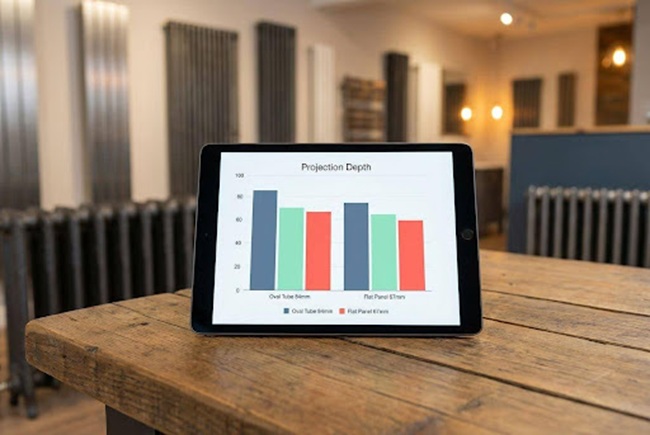
- Small size changes can affect fitting: for example, a 635 x 236mm oval tube projects about 84mm from the wall, while a 635 x 280mm flat panel option is listed at about 67mm projection, which can matter in tight walkways.
- For low temperature systems (like heat pumps), the ΔT rating matters: industry guidance warns that radiators must be advertised with declared outputs, typically at ΔT50 for standard systems and ΔT30 for low temperature systems.
- Installation is now more controls-led: Part L industry guidance says TRVs are expected on radiators in most boiler replacements, except in the room with the main thermostat.
Key Factors to Consider When Choosing a Designer Radiator
If you want designer radiators that feel “premium” without premium pricing, you need to treat the purchase like a spec check, not a colour choice.
Start with size, then match heat output in btu’s, then choose the finish that suits your decor and how the room is used.
One more detail that many buyers miss: the heat output should be stated using recognised test standards and a clear ΔT rating, so you can compare like-for-like across brands.
- Measure properly: height, width, projection, and pipe centres decide whether it fits without redoing pipework.
- Match heat output to your system: many wet systems use ΔT50 figures, heat pumps usually need ΔT30 figures.
- Decide on format: slim single panel for narrow spaces, double panel for higher output, or column radiators for a traditional look.
- Plan the install: valves, TRVs, bleeding access, wall strength, and delivery access all affect the final cost.
Size and dimensions
Size is your “make or break” factor because it drives both heat output and how much installation work you trigger.
Most ranges let you filter heights from 400mm to 1800mm and widths from 236mm to 1610mm, so you can usually land close to your existing footprint.
| Dimension to check | What it affects | What you should do |
| Height and width | Wall fit and surface area for heat | Measure the usable wall space, including skirting, sockets, and door swing clearance. |
| Projection (depth from wall) | Walkways, hallways, tight bathrooms | Prefer flatter profiles where people pass close by, especially in corridors and near dining seating. |
| Pipe centres | Whether you can reuse existing pipework | Match pipe centres to reduce plumbing changes, or budget for pipe movement if you are changing formats. |
| Weight | Fixings and wall type suitability | Check stud walls and use the correct fixings, heavy radiators may need reinforcement or floor supports. |
Buy for the wall you have, not the photo you like, then you avoid “hidden” fitting costs.
Traditional column radiators need extra attention here. One retailer’s spec for a 785mm x 1454mm cast iron 4-column radiator lists a 22.1 litre capacity and a wet weight of 156.52kg, which changes both fixings and delivery planning.
Heat output (BTUs)
BTU (British thermal unit) output tells you how much heat the radiator can emit, usually stated as BTU per hour.
The crucial part is the ΔT rating attached to that number, because the same radiator will output very different heat at different water temperatures.
Industry bodies have highlighted that radiators should be sold with declared outputs at standardised ratings, commonly ΔT50 for typical wet systems and ΔT30 for low temperature systems, so you can avoid exaggerated claims.
| Heating setup | Common rating you’ll see | What to do with it |
| Standard wet central heating | ΔT50 | Use ΔT50 outputs for comparisons, and size to your room heat loss. |
| Low temperature heating (often heat pumps) | ΔT30 | Ask for ΔT30 outputs, or expect to upsize radiators to hit the same comfort level. |
- Use a heat loss calculation: it’s more reliable than picking a radiator by room type alone.
- Check the declared output unit: many retailers show Watts and btus, and you can convert if needed (1 Watt is about 3.412 BTU/h).
- Watch for “too good to be true” outputs: if a slim radiator claims huge btus without a clear ΔT rating, treat it as a red flag.
Style and finish
Style is where designer radiators earn their keep, you’re getting heat plus a piece of decor.
Powder coated finishes are common for steel designs because they hold colour well and suit everything from clean White to modern Anthracite and Black.
- Textured finishes: they hide fingerprints and small scuffs better than high-gloss, which is useful in hallways and kitchens.
- Flat panels: they read as “minimal” and usually feel easier to clean than multi-tube designs.
- Column radiators: they work well in period rooms, and they can look right at home beside traditional skirting and cornices.
- Mirror styles: they can earn space back in compact bathrooms, but always check output because glass-fronted designs vary by model.
Finish can slightly affect performance in the real world if it changes airflow around the radiator, so keep your final decision anchored to btus, not just colour.
Installation requirements
A radiator can be cheap, then turn expensive if the installation plan is vague.
Decide early whether you’re fitting to a wet system, going electric, or designing for a low temperature future where 55°C flow temperatures are more common in modern system design guidance.
- Controls: TRVs where appropriate, plus a room thermostat and timer controls so you can actually regulate comfort and costs.
- System cleanliness: boiler manufacturers such as Baxi reference Part L changes that align with BS 7593 practices (clean, filter, inhibit) to reduce sludge-related issues.
- Fixings: match the radiator weight to the wall type, heavy column radiators may need specialist brackets or feet.
- Fittings: budget for valves, bleed valve access, blanking plugs, and pipe covers if decor matters.
- Electrical work: if you choose electric radiators or heated elements, use a qualified electrician for compliant connection and isolation.
If you are changing pipe centres, treat it as a plumbing job first and a radiator swap second.
Best Horizontal Designer Radiators
Horizontal designer radiators are usually the easiest win for value because they often replace like-for-like under windows with minimal pipework changes.
| Model (size) | Typical sale price | Heat output (ΔT50) | Projection | Best for |
| Oval tube, single (635 x 236mm) | £64.99 | 751 BTU (221W) | Approx 84mm | Very narrow walls, tight spaces, under windows |
| Flat panel, single (635 x 280mm) | £64.99 | 769 BTU (226W) | Approx 67mm | Cleaner look, slightly flatter install depth |
635 x 236mm White Single Oval Tube Horizontal Radiator
This is the classic “small but tidy” pick for modern radiators, and the dimensions make it useful where many radiators simply won’t fit.
The retailer listing for this model shows £64.99 (down from £84.99), with 751 btus (221W) at ΔT50, a 10-year warranty, and testing to BS EN 442.
- Size: 635mm height x 236mm width
- Output: 751 BTU (221W) at ΔT50
- Pipe centres: approx 336mm
- Projection: approx 84mm
- Material: low carbon steel
Use this style where you need heat on a narrow wall section, and pair it with neat pipe covers if the radiator sits in a visible spot like a lounge or kitchen.
635 x 280mm Anthracite Single Flat Panel Horizontal Radiator
If you want the same “compact footprint” idea with a flatter visual profile, a single flat panel is a strong option.
A current product listing for a 635 x 280mm anthracite single flat panel model shows the same £64.99 sale price point (down from £84.99) with 769 BTU (226W) at ΔT50, plus a 10-year warranty and BS EN 442 testing stated.
- Size: 635mm height x 280mm width
- Output: 769 BTU (226W) at ΔT50
- Pipe centres: approx 380mm
- Projection: approx 67mm
- Finish: Anthracite, good for hiding day-to-day marks
The practical advantage is the shallower projection, which can feel noticeably better in tighter walkways.
Best Vertical Designer Radiators
Vertical designer radiators are the go-to choice when you have more wall height than wall width.
They also work well as a visual feature in kitchens and hallways, especially where you want decor impact without losing usable floor space.
| Model (size) | Price point | Heat output (ΔT50) | What to check |
| Oval tube, single (1600 x 236mm) | £89.95 (example sale) | 1879 BTU (551W) | Pipe centres, projection, and wall strength |
| Flat panel, single (1600 x 280mm) | £79.99 (example sale) | Check listing | Declared BTU, ΔT rating, and valve placement |
1600 x 236mm Feather Grey Single Oval Tube Vertical Radiator
This style gives you a modern “column look” without the bulk and weight you often get with traditional column radiators.
On the retailer page, this model is listed at £89.95 (down from £109.95) with 1879 BTU (551W) at ΔT50, plus a 10-year warranty and BS EN 442 testing stated.
- Size: 1600mm height x 236mm width
- Output: 1879 BTU (551W) at ΔT50
- Weight: 12.46kg
- Pipe centres: approx 336mm
- Projection: approx 84mm
The textured grey finish is also a sensible decor choice for busy areas, it tends to look clean longer than bright white in high-traffic spots.
1600 x 280mm White Single Flat Panel Vertical Radiator
A white flat panel keeps the look simple, and the 1600mm height is great where you want a tall feature without going full-width.
Pricing moves a lot in this category. One retailer listing shows £79.99 (down from £114.95) for a 1600 x 280mm white single flat panel vertical radiator, so treat it as a “watch list” size and buy when the offer suits.
Before you commit, check the declared btus and ΔT rating on the product spec so you can compare it properly against other 1600 x 280mm options.
- If you have a heat pump: ask for the ΔT30 output, not just the ΔT50 figure.
- If it’s going in a bathroom: plan valve placement so towels and cleaning access stay easy.
- If you want easy maintenance: a flat face is quicker to wipe down than multi-tube designs.
Durability and Energy Efficiency of Designer Radiators
For durability, your biggest enemy is poor system water quality, followed by weak brackets and thin finishes that chip easily.
Steel and aluminium can both last well, but you should base your decision on the heating system and the room, not a blanket “material ranking”.
The Heating and Hotwater Industry Council has warned that some radiators are marketed with exaggerated heat outputs, which is another reason to stick to properly declared outputs at standard ΔT ratings.
- Look for recognised testing: BS EN 442 testing and clear ΔT50 or ΔT30 outputs make comparisons fair.
- Match to low temperature heating: Part L aligned guidance encourages sizing emitters to work at lower flow temperatures, which can also make later heat pump upgrades easier.
- Protect the system: boiler manufacturer guidance linked to Part L changes aligns with BS 7593 style steps (clean, filter, inhibit) to help prevent sludge damage.
- Don’t ignore warranty terms: a 10-year warranty is common in many value-focused designer ranges, and it’s worth checking what it covers before you buy.
On the delivery side, durability also starts before installation. If your courier delivery arrives with damaged corners or crushed packaging, photograph it straight away and raise it immediately, you’ll save yourself time later.
FAQs About Designer Radiators
These are the questions I hear most often when people try to balance btus, pricing, and decor without getting pulled into the wrong product type.
Are designer radiators efficient?
Designer radiators can be very efficient, as long as you size them correctly and match the output rating to your heating system.
The efficiency win comes from control and comfort. With proper TRVs, good zoning, and a radiator sized to room heat loss, you spend less time overheating rooms and opening windows to compensate.
- For standard systems: use ΔT50 outputs for your comparisons.
- For heat pumps: look for ΔT30 outputs and expect to upsize emitters to deliver the same room temperature.
- For long-term reliability: keep system water protected with appropriate cleaning, filtration, and inhibitor.
What is the difference between single and double panel radiators?
Single panel radiators are slimmer and easier to fit into tight spaces.
Double panel radiators usually give a higher heat output in a similar wall footprint, but they project further and can need more careful placement in narrow rooms.
| Example at the same height and width | Heat output (ΔT50) | Projection |
| 635 x 236mm oval tube, single | 751 BTU | Approx 84mm |
| 635 x 236mm oval tube, double | 1099 BTU | Approx 104mm |
If you’re working around doors, seating, or narrow corridors, that extra projection can matter as much as the extra btus.
Conclusion
Affordable designer radiators can look sharp and still do the job, if you choose by size, declared btus, and a clear ΔT rating.
That’s true whether you prefer modern radiators or traditional column radiators that anchor a more classic decor style.
Plan the full install cost, including TRVs, valves, and any pipework changes, then think about delivery access so the courier can drop the radiator safely where you need it.
If you see an express Saturday option advertised at checkout, confirm the cut-off time and the exact date shown on the retailer’s countdown, for example Saturday 17 January 2026.
FAQs
- What are cheap designer radiators, and do they give affordable style without compromise?
Cheap designer radiators are style-led heaters that cost less, yet use good materials and smart design. They give affordable style and don’t compromise quality when you choose trusted makes with clear heat output and a solid warranty.
- How do I pick the best cheap designer radiators for my room?
Measure the room and match the kW rating to the space. Compare the best cheap designer radiators for heat output, size, finish and warranty, and pick one that fits your pipe layout.
- Are cheap designer radiators energy efficient and built to last?
Many are both efficient and durable, low price does not mean weak build. Pick steel or aluminium models, or a bathroom heater for wet rooms, check the heat output and the warranty to be sure.
- Can I fit one myself, and will it raise my heating bills?
Some models are simple for DIY, but a plumber is safer on sealed systems. A well sized, efficient radiator should not raise bills much, it often heats the room faster, so you use less energy.