
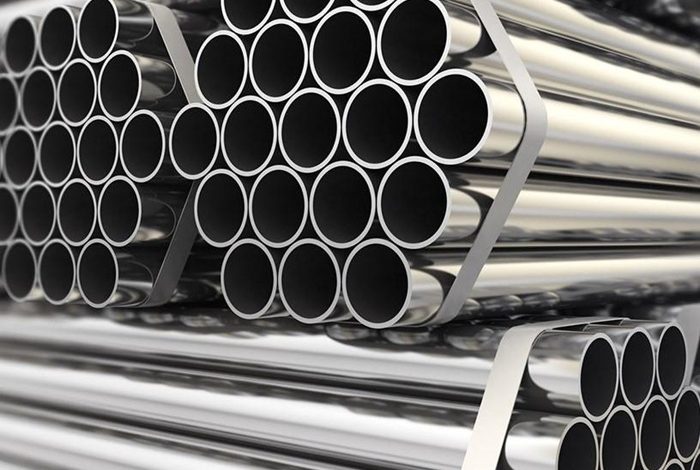
Hey, if you’re in the steel business, you know how wild prices can get. Right now, in December 2025, things are pretty steady but low. Buyers are holding back, and mills are watching every move. This guide breaks down what to expect for China steel pipe prices in 2026. I’ll keep it real and simple – no fluff, just facts based on current data and trends. Whether you’re stocking up for oil lines or building projects, this will help you plan.
Current Prices in December 2025
Let’s start with where we stand today. As of December 11, 2025, the overall China steel price index sits at about 3,539 RMB per ton. That’s up just 0.1% from yesterday, but down 6.5% from last year. For pipes specifically, welded tubes average around 3,900 RMB per ton for 40mm sizes, while seamless ones hover near 4,385 RMB per ton for common specs like 57×3.5mm in 20# steel.
Local markets tell the story. In Tianjin, welded pipe prices are flat at roughly 3,800-4,000 RMB per ton, depending on the mill. Seamless pipes in Changchun are a bit higher, around 4,200-4,500 RMB per ton for fluid tubes. Exports are key too – China shipped out 9.98 million tons of steel products in November alone, up 7.5% year-over-year. But pipe exports specifically hit 450 million tons in the first nine months, a 12% jump.
Why so low? Demand from construction is soft due to the property slowdown. Mills are profitable at only 35%, so they’re not pushing prices up. Raw materials like iron ore are at $93 per ton forecasted for 2026, keeping costs in check. If you’re buying now, it’s a good time – prices are stable or dipping slightly in spots like Chengdu for square pipes.
Key Factors Driving Prices in 2026
Prices don’t move on their own. Here’s what will shape them next year.
First, domestic demand. China’s steel use will drop 2% in 2025, but slow to just 1% down in 2026 as the housing market hits bottom. Infrastructure and manufacturing will pick up slack – think new energy projects and exports. Total steel demand, including overseas sales, could grow 3% or more. For pipes, oil and gas lines plus water systems will drive need, especially in Asia-Pacific where the market grows at 6.5% CAGR through 2035.
Second, supply side. Overcapacity is huge – 50 million tons surplus in 2025, maybe 350 million long-term. But Beijing is cracking down with production cuts in places like Shandong. Expect output to top 1.5 billion tons, up 3%, but with more focus on quality exports. This could tighten supply and nudge prices up.
Third, global trade. Tariffs are a pain. The US has 25% on Chinese steel, EU’s CBAM starts full in 2026 adding €42.8 per ton carbon tax (up to €179 long-term). That raises export costs 4-6% short-term. But Belt and Road countries will absorb more, keeping exports strong at over 100 million tons yearly.
Raw costs matter too. Iron ore at $93/mt helps, but scrap and coal swings could add 10-15% volatility. Green shifts – like low-carbon pipes – will cost extra but open premium markets.
Forecast: What to Expect Month by Month
Based on analyst data, here’s a straightforward outlook for 2026. Overall steel prices should recover slowly from current lows. Rebar, a bellwether, might hit 3,256 CNY/ton average, up from 3,057 now. Pipes will follow, with 2-4% overall rise.
- Q1 2026 (Jan-Mar): Prices start flat or down 1-2%. Winter slowdowns and post-holiday blues keep welded pipes at 3,850-3,950 RMB/ton. Seamless holds at 4,300-4,400. Exports dip seasonally, but infrastructure starts.
- Q2 2026 (Apr-Jun): Mild uptick of 1-3%. Spring projects kick in; expect welded at 3,950-4,050 RMB/ton. Seamless climbs to 4,400-4,500 on oil demand. CBAM hits exports, adding pressure but boosting domestic sales.
- Q3 2026 (Jul-Sep): Stronger growth, 2-4%. HRC steel forecast at $882/ton pulls pipes up – welded to 4,000-4,100, seamless to 4,500-4,600. Manufacturing booms; global demand from India and SE Asia helps.
- Q4 2026 (Oct-Dec): Steady at 3-5% yearly gain. End-year rush pushes welded to 4,050-4,150 RMB/ton, seamless 4,550-4,650. But watch for trade spats – if tariffs ease, add another 2%.
Year-end average: Welded pipes up to 4,000 RMB/ton (+2.5%), seamless to 4,450 RMB/ton (+1.5%). Volatility around 10-15% due to policy shifts. If China cuts output more, prices could jump 5-7%; if property drags, stay flat.
Price Comparison: Seamless vs Welded Pipes
Not all pipes are equal. Seamless ones cost more but handle high pressure better – think oil lines. Welded are cheaper for water or structures.
| Type | Dec 2025 Avg (RMB/ton) | Q1 2026 Forecast | Q4 2026 Forecast | Key Use |
| Welded (40mm) | 3,900 | 3,900 | 4,100 | Water, buildings |
| Seamless (57mm) | 4,385 | 4,350 | 4,600 | Oil, gas |
Seamless will see tighter supply, so bigger gains. Welded benefits from volume exports.
How This Affects Your Business
If you’re a trader or builder, low prices now mean stock up before Q2 rises. Exporters face tariff hits – budget 5% extra for EU sales. Mills? Focus on green certs for premium pricing.
For reliable supply, check out suppliers like those on uniasen.com. They handle everything from quotes to delivery. And if you want top steel pipe in China, their list of mills is gold.
Conclusion
2026 looks better than 2025 for China steel pipe prices – slow recovery to 4,000+ RMB/ton average, driven by exports and infra. But stay sharp on tariffs and demand shifts. Track monthly indexes like Custeel’s for updates. Got questions or need a quote? Hit up a solid supplier today – timing is everything in this market.