
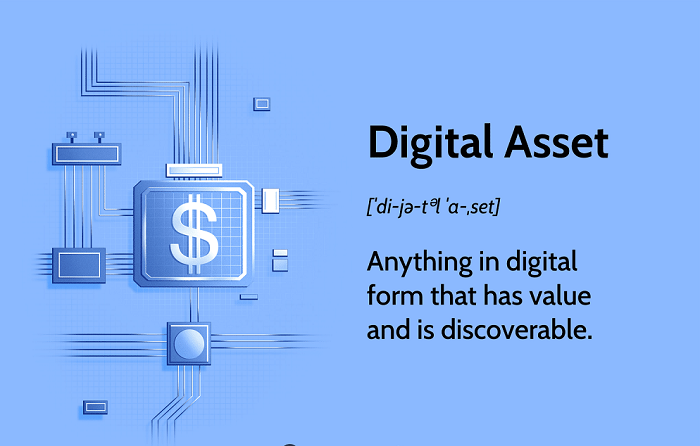
Digital assets have moved from the fringes of finance to the center of some of the most significant conversations in banking, government, and investment today. Whether you’ve heard the term in passing or want to understand what it actually means for your money, this guide breaks it down plainly.
What are digital assets?
A digital asset is any representation of value stored on a cryptographically secured distributed ledger, which is commonly known as a blockchain. Unlike traditional bank records, a blockchain operates across a decentralized network, making transactions transparent, verifiable, and resistant to tampering. Common examples include cryptocurrencies like Bitcoin and Ethereum, stablecoins pegged to the U.S. dollar, and non-fungible tokens (NFTs). According to the IRS, digital assets are treated as property for federal tax purposes, meaning selling or exchanging them may trigger capital gains or losses, which is much like stocks or real estate.
How digital assets are used today
Use cases have expanded well beyond peer-to-peer payments. People invest in crypto as a long-term asset, businesses accept it as payment, and decentralized finance (DeFi) platforms let users lend and borrow without a traditional bank. Tokenized financial products, which are real-world assets like bonds or real estate represented on a blockchain, are also gaining traction with institutional investors. For everyday Americans, access points have multiplied. Many people find that using a Bitcoin ATM near their location is one of the simplest ways to buy or convert digital assets on the go, with these ATMs allowing users to access their assets quickly and without needing an online exchange account.
The U.S. regulatory landscape
Regulation involves several agencies with overlapping roles. For instance, the SEC oversees assets classified as securities, the CFTC handles crypto commodities and derivatives, and the IRS governs tax reporting. 2025 marked a significant turning point. As Cleary Gottlieb’s 2026 Digital Assets Regulatory Update outlines, the SEC launched a dedicated Crypto Task Force, banking regulators cleared the way for institutions to engage more directly with digital assets, and Congress passed the GENIUS Act establishing a stablecoin framework, all signaling a decisive move toward regulatory clarity.
Why digital assets are becoming more important
Institutional adoption is accelerating. Bitcoin ETFs have attracted billions in capital, and major financial firms are exploring tokenized versions of traditional assets from Treasury bonds to real estate. The Trump administration’s executive order establishing a digital asset working group signals growing federal recognition that this technology will shape the future of U.S. financial infrastructure.
Digital assets are becoming a standard part of how money moves and gets invested. For Americans at every level of financial experience, understanding the basics is a practical first step toward participating in that shift.