
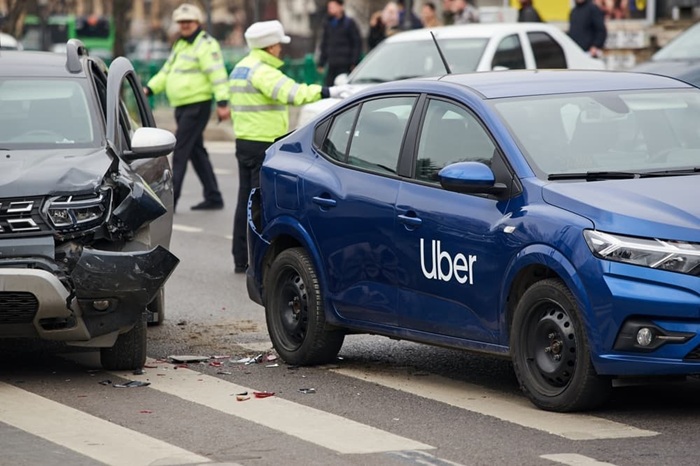
You open the app, watch the little car icon crawl across the map, and climb in. It feels routine. But somewhere between pickup and destination, every rideshare trip carries a legal complexity most passengers never consider: the moment a crash happens, you are not simply a passenger in a friend’s car or a commercial taxi. You are a claimant navigating an overlapping, multi-party insurance structure specifically engineered to limit what these platform companies pay out.
Rideshare injuries are not rare. According to a landmark study published in JAMA Internal Medicine, the expansion of Uber and similar services corresponded with a roughly 3% increase in fatal motor vehicle accidents in U.S. cities. That translated to approximately 987 additional traffic fatalities per year. With an estimated 1.7 million active Uber drivers in the United States alone, the scale of exposure is enormous.
If you were injured riding in or struck by a rideshare vehicle, this guide explains exactly what happens next, who is responsible, and why the gaps in coverage matter more than you might think.
Understanding the Three Rideshare Insurance Periods
Both Uber and Lyft divide driver activity into three distinct insurance periods. The period active at the exact moment of a crash determines which policy applies and how much coverage is available. This structure is not consumer-friendly by accident; it is the primary mechanism through which rideshare companies limit their financial exposure.
| Period | Driver Status | Liability Coverage | Uninsured Motorist | Passenger Risk |
| Period 0 | App off / personal use | Driver’s personal policy only | Driver’s personal policy | N/A |
| Period 1 | App on, waiting for a ride | $50K/person, $100K/incident; $25K property | Not included | High Risk |
| Period 2 | Ride accepted, en route to pickup | $1M liability (Uber/Lyft policy) | Included | Protected |
| Period 3 | Passenger in vehicle | $1M liability (Uber/Lyft policy) | Included | Protected |
At first glance, the $1 million policy sounds reassuring. The problem lies in Periods 0 and 1, and in how insurance companies dispute which period was actually active. Uber and Lyft do not independently verify app status; disputes over this data are common and often require legal intervention to resolve.
Does Uber or Lyft Insurance Cover Passengers?
Yes, but only under Periods 2 and 3. Once a driver accepts your ride request and you are in the vehicle, both Uber and Lyft provide up to $1 million in third-party liability coverage, plus uninsured and underinsured motorist protection. This coverage is primary, meaning it applies before a driver’s personal auto policy.
However, there is a critical distinction. This $1 million represents the maximum available, not a guarantee of recovery. You must still file a claim, document your injuries, prove liability, and navigate the company’s claims process, which is managed by third-party adjusters whose job is to minimize payouts. Many passengers do not realize they have the right to reject initial settlement offers, or that a rideshare accident attorney can independently evaluate whether the full policy value applies to their case.
Note: Uber’s and Lyft’s contingent comprehensive and collision coverage requires drivers to carry personal collision coverage first. If a driver does not, their vehicle damage claim may be denied entirely, creating financial pressure that affects the entire claims timeline.
Who Is Liable in a Rideshare Accident?
Liability in a rideshare crash is rarely straightforward. Depending on the circumstances, you may have valid claims against one or more of the following parties:
- The Uber or Lyft driver, if negligent driving caused the crash
- Another at-fault driver, if a third party caused the collision
- Uber or Lyft directly, in certain circumstances involving negligent hiring or retention
- A vehicle manufacturer, if a defect contributed to the accident
- A government entity, if road conditions or negligent infrastructure played a role
Uber and Lyft have historically argued that their drivers are independent contractors, not employees, which shields the companies from direct vicarious liability. Courts across the U.S. have increasingly pushed back on this classification. The National Conference of State Legislatures notes that 49 states now have specific TNC (transportation network company) legislation defining the insurance obligations these platforms must meet, but enforcement and coverage dispute resolution still fall heavily on injured claimants.
The Coverage Gaps That Leave Passengers Underprotected
The insurance tiers create real, documented gaps. Consider these scenarios that fall outside clear coverage:
The Period 1 gap.
A driver has the app open and is waiting for a match. They run a red light and T-bone your vehicle. Period 1 coverage caps at $50,000 per person for bodily injury. A serious accident involving spinal injuries, surgeries, or long-term rehabilitation can easily exhaust that limit within weeks. If the driver’s personal insurer argues the vehicle was being used for commercial purposes, they may deny the claim entirely, leaving the injured person to pursue the driver personally.
The app-status dispute.
Insurance adjusters regularly dispute whether a driver had the app active at the moment of a crash. Without independent legal counsel, passengers often accept a denial at face value. In reality, GPS data, app logs, and cell tower records can frequently establish the true status of a driver’s app, but accessing that data requires prompt legal action.
Uninsured drivers outside the platform.
If a third-party driver with no insurance hits an Uber in which you are a passenger, Uber’s uninsured motorist coverage (active in Periods 2 and 3) would theoretically protect you. But UM/UIM claims against rideshare companies are notoriously contested. According to the Insurance Information Institute, approximately 14% of all U.S. drivers were uninsured in 2022, making this scenario more common than most riders assume.
What Should You Do Immediately After a Rideshare Accident?
The actions taken in the first 24 to 72 hours after a rideshare crash have an outsized effect on the outcome of any claim. Here is what matters most:
- Call 911 immediately.
Even in accidents that seem minor, a police report creates an official record of the incident that is difficult for insurers to dispute later.
- Document everything at the scene.
Photograph the vehicle positions, damage, road conditions, traffic signals, and any visible injuries. Screenshot your Uber or Lyft trip receipt, which timestamps the ride and confirms your passenger status.
- Seek medical evaluation the same day.
Adrenaline masks pain. Delayed symptom onset is common with soft-tissue injuries, concussions, and internal trauma. Medical records created within hours of a crash are far stronger evidence than those created days later.
- Report the incident through the Uber or Lyft app.
Both platforms have in-app accident reporting. Do this promptly, but do not give recorded statements to any insurance adjuster without legal advice first.
- Contact a rideshare accident attorney before accepting any settlement offer.
Initial offers from rideshare insurers are almost always below fair value. An attorney experienced in rideshare accident claims can calculate the full value of medical costs, lost income, pain and suffering, and long-term care needs before any number is accepted.
Can You Sue Uber or Lyft Directly?
In most states, suing Uber or Lyft directly requires proving that the company itself was negligent beyond the driver’s actions. This can apply in cases involving negligent hiring (for example, where a driver had a prior DUI that should have disqualified them), failure to conduct adequate background checks, or systemic policies that encouraged unsafe driving behavior.
Both Uber and Lyft have faced class-action and individual lawsuits on these grounds with significant outcomes. In 2023, Lyft reached a $25 million class-action settlement citing failures in driver screening. While the contractor model protects these platforms from most direct liability, it does not provide absolute immunity, particularly when a company’s own policies contributed to foreseeable harm.
For most injured passengers, the more immediate priority is filing a claim under the applicable insurance period while preserving the right to pursue additional claims if deeper negligence is discovered during litigation.
How Long Do You Have to File a Rideshare Accident Claim?
Statutes of limitations for personal injury claims vary by state but typically range from two to three years from the date of the accident. In Texas, for example, the statute of limitations for personal injury is two years under Texas Civil Practice and Remedies Code Section 16.003. Missing this window eliminates your right to pursue compensation regardless of how strong your case may be.
There is also a practical urgency that goes beyond legal deadlines. Evidence degrades. Witnesses become unreachable. App data and GPS records are retained only for limited periods before being purged. The sooner legal counsel is engaged, the more evidence can be preserved and the stronger your position will be when filing an insurance claim after a rideshare accident.
According to the Insurance Information Institute, 74% of accident victims receive higher compensation when represented by a personal injury attorney, compared to those who negotiate directly with insurance companies.
Why the Gig Economy Model Creates Unique Legal Risks
Traditional taxi and limousine companies are commercial carriers that operate under strict regulatory frameworks, carry commercial auto policies, and employ their drivers directly. The entire rideshare model was designed to sidestep those frameworks by recasting drivers as entrepreneurs who “partner” with the platform.
This structure has produced genuine consumer value in the form of lower prices and broader availability. It has also produced an insurance architecture where a passenger riding in a licensed commercial vehicle is less comprehensively protected than a passenger in a traditional taxicab in most U.S. jurisdictions.
According to Pew Research Center, approximately 16% of American adults have earned money through gig economy platforms. As rideshare usage continues to grow, with the global rideshare market projected to exceed $230 billion by 2030, the volume of accident claims will grow proportionally. Understanding how coverage works is no longer optional information; it is basic digital literacy for anyone who uses these platforms.
Final Thoughts
Being injured in an Uber or Lyft accident is not simply a matter of filing a claim and waiting for a check. It is a multi-party legal process involving overlapping insurance policies, corporate legal teams, and a claims infrastructure designed to resolve disputes at the lowest possible cost to the platform. The passengers least likely to receive fair compensation are those who navigate that process alone.
Knowing the three coverage periods, understanding who bears liability, acting quickly to preserve evidence, and securing legal representation before accepting any settlement offer are the four steps that separate outcomes. Rideshare companies have legal and claims teams working immediately after every reported accident. Injured passengers deserve the same level of representation on their side.
If you were hurt in a rideshare crash, speaking with an experienced Houston rideshare accident lawyer is the single most important step you can take to protect your rights and your financial recovery.
Disclaimer: This article is intended for general informational purposes only and does not constitute legal advice. Laws vary by jurisdiction. If you have been injured in a rideshare accident, consult a licensed personal injury attorney in your state for guidance specific to your situation.