The self-storage industry has historically operated on a model that requires significant staff involvement in access management — issuing and recovering physical keys, managing padlock inventories, responding to tenant lockouts, and manually overlocking units when accounts fall into arrears. Each of these tasks consumes staff time, introduces operational friction, and creates security vulnerabilities that modern technology is now capable of eliminating entirely. The adoption of smart lock systems designed specifically for the storage sector is accelerating, and the facilities leading this transition are discovering that the smart lock benefits extend well beyond convenience into the fundamental economics and security profile of their operations.
For storage facility operators evaluating the case for smart lock investment, the relevant question is not whether the technology delivers advantages over traditional padlock-based systems — it clearly does — but which specific advantages matter most for their facility, their tenants, and their operational model. The answer varies by facility size, tenant profile, and the competitive environment in which the operator works, but the core benefits are consistent across the sector.
Eliminating Physical Key Management
The padlock and key model of storage unit access creates an ongoing operational overhead that smart lock systems remove completely. Physical keys must be issued, tracked, and recovered. Lost keys require lock changes. Master key systems create security vulnerabilities when master keys are misplaced or compromised. Staff must be present — or on call — to assist tenants who are locked out, have forgotten their combination, or need access outside of normal staffed hours.
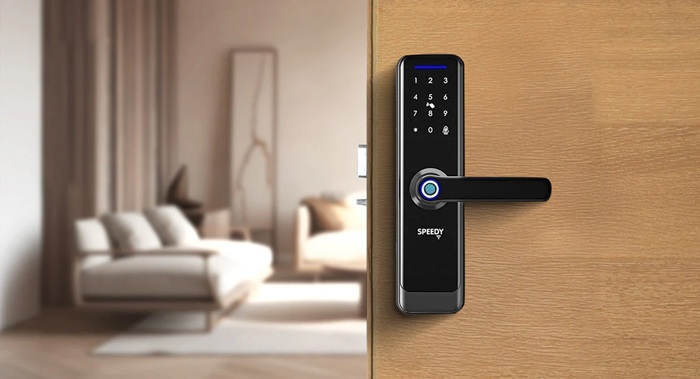
A smart lock system replaces this entire infrastructure with digital credential management. Tenants access their units via a keypad code or a smartphone app — credentials that are assigned automatically when a tenancy begins, modified if a security concern arises, and revoked instantly when a tenancy ends, all without any physical key exchange or staff involvement. The operational time saved is substantial, and the security improvement is equally significant: digital credentials are traceable, revocable, and cannot be physically duplicated.
Remote Access Control and Automated Overlock
One of the most operationally valuable features of smart lock systems for storage facilities is the ability to manage access remotely, in real time. Granting a new tenant immediate access from the management office, overlocking a unit whose account has fallen into arrears without dispatching a staff member to the unit, and releasing an overlock the moment a payment is received — these operations are executed through a web portal or integrated facility management software, from any location with an internet connection.
Automated overlock is particularly significant for facility economics. Traditional overlock processes require staff to physically visit each affected unit, attach a secondary lock, and later return to remove it a labour-intensive process that delays revenue recovery and creates ongoing management overhead. Smart lock automated overlock eliminates the physical element entirely, implementing and releasing access restrictions instantly and without staff involvement. The labour savings across a busy facility with regular arrears management requirements can be substantial.
Access Tracking and Audit Trails
Every access event on a smart lock system is logged automatically — which unit was accessed, by whom, and at what time. This access trail is available through the management portal in real time, providing facility operators with a level of visibility into unit access activity that padlock-based systems cannot approach. For security incident management, insurance claims, or regulatory compliance, this documented access history is a practical asset that traditional systems simply do not provide.
Tenants benefit from the same visibility applied to their own units. Access logs accessible through the tenant app confirm that their stored belongings have been accessed only by themselves — or, where they have shared access credentials with family members or authorised helpers, that access has occurred as expected. This transparency builds tenant confidence in the facility’s security management in ways that a padlock on a door cannot.
Tenant Convenience as a Competitive Differentiator
The convenience advantages of smart lock technology are experienced most directly by tenants — and in a competitive storage market, tenant experience is a meaningful differentiator. Twenty-four-hour keyless access without requiring staff to be present, the ability to share temporary access credentials with a removal company or family member, and the option to unlock via a smartphone app rather than a physical key all contribute to a tenant experience that compares favourably with facilities still operating on traditional access models.
The ability to offer premium services — time-limited guest access, real-time unit alerts, temperature monitoring — as value-added options creates new revenue streams that padlock-based facilities cannot replicate. For operators looking to compete on more than price, the service differentiation that smart lock technology enables is a genuine commercial advantage.
Hardware Built for the Storage Environment
The practical advantages of smart lock technology are only realised if the hardware itself is robust enough for the storage environment. Outdoor units, climate-controlled facilities, and high-traffic corridors all present conditions that standard consumer-grade smart locks are not designed to handle. Purpose-built storage smart locks — with IP65 or higher weatherproofing, piezoelectric keypads rated for millions of actuations, and battery systems designed for seven to ten years of operation without replacement — provide the operational reliability that facility operators require.
The combination of genuine hardware durability and comprehensive management software capability is what distinguishes purpose-designed storage smart locks from adapted consumer products — and it is the combination that delivers the full range of operational, security, and commercial advantages that make smart lock investment compelling for serious storage facility operators.