
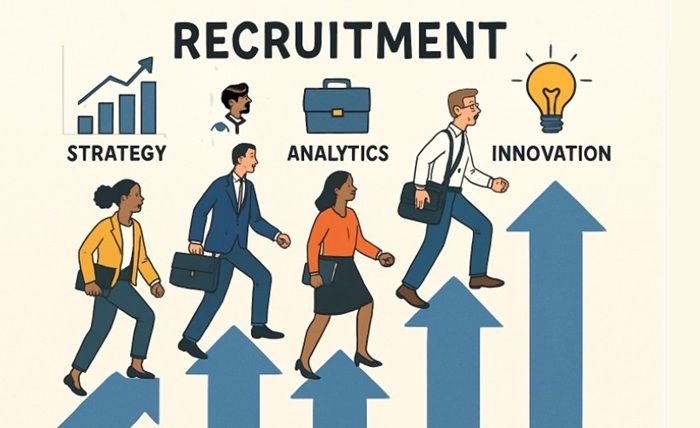
In today’s rapidly evolving marketplace, recruitment is emerging as a strategic pillar that goes far beyond the mechanics of filling positions within a company. The modern recruitment process is an intricate blend of strategy, analytics, and brand positioning that not only secures top talent but also directly shapes a company’s growth trajectory. Before delving into the ways recruitment transforms companies, it’s beneficial to define recruitment so the full impact of this business-critical function is understood. Smart hiring practices have become a foundation for innovation, cultural strength, and long-term sustainability.
With the right recruitment approach, companies can align their workforce with business objectives, reduce inefficiencies, boost workforce diversity, and tell a compelling employer story. This ensures the best individuals are brought on board to power future growth and drive strategic initiatives. More organizations now recognize that who they hire and how they hire matter as much as the products or services they offer. As business landscapes grow increasingly complex, investment in talent acquisition strategies that incorporate data, branding, and automation has never been more crucial.
The increasing integration of technology, analytics, and employer brand in recruitment not only delivers immediate benefits, such as faster hiring and higher-quality candidates, but also cultivates a workforce resilient to future disruptions. Even in turbulent times, companies with visionary recruitment strategies tend to outperform their competitors in both profitability and reputation by ensuring the right people are positioned to solve tomorrow’s challenges.
Achieving recruitment excellence requires holistic practices that integrate data-driven decision-making, compelling employer branding, and cutting-edge automation. As demonstrated by leading organizations, employing these elements results in quantifiable efficiency and qualitative gains across all areas of business operations.
Strategic Recruitment: Aligning Talent with Business Goals
Recruitment today is deeply interwoven with the overall business strategy. It’s not enough to fill vacancies as they arise; organizations must proactively identify the talent required to meet future objectives. By analyzing market trends, anticipating growth areas, and aligning hiring initiatives with long-range strategic plans, companies cultivate a workforce that drives innovation, adapts to change, and delivers measurable value across departments. Businesses that prioritize competency mapping and leadership development during recruitment are far better positioned to achieve scale and navigate market volatility.
Building Future-Ready Teams
A future-ready recruitment strategy assesses both immediate and upcoming talent needs, ensuring employees bring not only technical expertise but also the vision and adaptability required for ongoing business evolution. This strategic alignment prevents mismatches that can stall progress and instead fosters teams that enable growth and resilience.
Data-Driven Hiring: Enhancing Efficiency and Reducing Bias
Data-driven recruitment practices are transforming traditional hiring by injecting objectivity and transparency into every stage of the process. Through comprehensive data analytics, recruiters can evaluate where the most successful candidates come from, the predictors of long-term retention, and the sources of bottlenecks or unconscious bias. According to The Hackett Group, organizations leveraging advanced technology see a 38% faster time to fill, a 42% faster time to hire, and 46% more qualified applicants—underscoring the efficiency gains possible when robust data backs decisions.
Bias Reduction and Diversity
By anchoring key decisions in structured data—from screening to final selection—companies can counteract outdated practices and promote inclusivity across their workforce, resulting in teams that are both more capable and more reflective of their customer base.
Employer Branding: Attracting Top Talent
Employer branding has become a non-negotiable differentiator in the competition for top talent. Organizations with a strong, positive reputation consistently attract higher-caliber candidates and benefit from significantly reduced recruiting costs. Job seekers now assess company culture, mission, and values just as rigorously as compensation packages or job titles.
The impact of a compelling employer brand extends far beyond the hiring process: it bolsters employee engagement, reduces turnover, and enhances the overall experience for both internal staff and external candidates. As noted by Recruiting News Network, companies with a trusted employer brand can spend less to achieve more, driving down cost-per-hire while obtaining better-fitted applicants.
The Role of AI and Automation in Modern Recruitment
Artificial intelligence and automation are fundamentally reshaping the hiring landscape. With AI-powered screening, resume parsing, and predictive analytics, recruitment teams can assess a larger volume of candidates with greater accuracy and speed. Automation handles repetitive tasks—from scheduling interviews to initial applicant sorting—freeing recruiters to focus on deeper relationship-building and assessment.
AI now goes beyond just automating tasks—it provides actionable insights and predicts candidate success by analyzing historical hiring data, job performance patterns, and even social signals. As detailed by Forbes, AI’s influence on recruitment continues to expand, revolutionizing every stage of talent acquisition from sourcing to onboarding.
Candidate Experience and Scalability
The adoption of these technologies dramatically improves candidate experience, with faster feedback and tailored communications, vital in today’s highly competitive talent markets. Automation, when thoughtfully implemented, supports both scale and personalization, ensuring that company culture and standards remain intact as the business grows.
Case Studies: Successful Recruitment Transformations
- Company A: Embracing data-driven recruitment led to a 30% reduction in time-to-hire and substantial improvement in retention rates, proving the tangible operational benefits of digital analytics.
- Company B: Revitalizing their employer brand resulted in a 25% rise in high-quality applications and a 20% decrease in hiring costs, exemplifying how brand perceptions directly impact hiring outcomes and organizational growth.
- Company C: Integrating AI tools across every phase of recruitment enabled a 40% faster hiring cycle and a more engaging candidate journey, confirming the value of automation in scaling efficient, high-quality hiring processes.
Conclusion
When designed as a holistic, forward-thinking strategy, recruitment becomes an engine for continuous business transformation. Incorporating analytics, employer branding, and AI-driven practices ensures not only the discovery and retention of top talent but also the cultivation of a dynamic, innovative, and future-ready workforce. Businesses that prioritize modern recruitment approaches stay ahead in the race for talent and are better equipped to meet evolving market demands while sustaining long-term success. Embracing these principles is not merely advantageous; it is increasingly non-negotiable in a world defined by rapid change and ever-intensifying competition.