
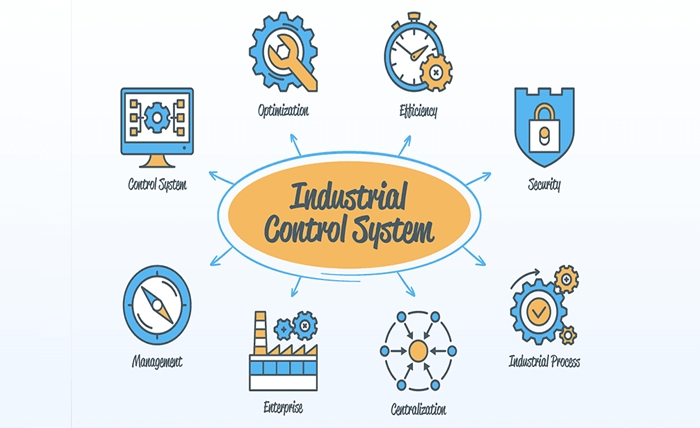
Factories, energy networks, water plants and logistics hubs all run on invisible decision-making – and someone has to keep that complexity in check, reliably and at speed. That’s where industrial control systems, or ICSs, sit. As automation spreads and digital tools push deeper into physical operations, these systems move from specialist infrastructure to board-level concern. If you’re responsible for performance, risk or growth, it pays to understand what’s behind the screens.
What makes up an ICS?
It’s a coordinated set of hardware and software designed to monitor and manage physical processes. At its core are programmable logic controllers, or PLCs. These rugged computers sit close to machinery, taking in signals from sensors and making split‑second decisions. They’re built for harsh environments and for doing the same job, flawlessly, thousands of times a day.
Above that layer, you’ll often find SCADA systems. This Supervisory Control and Data Acquisition software pulls data from across a site – or multiple – and presents it in a way people can understand, so operators can intervene when needed. In larger or more complex operations, distributed control systems handle continuous processes such as chemical production or power generation, balancing precision with resilience. No matter the industry, the principle stays the same: data comes in, logic is applied, action goes out. The result is consistent control at a scale no human team could manage alone.
Why do they matter for business?
From a business perspective, control systems are less about technology for its own sake and more about outcomes. When processes are automated and monitored in real time, efficiency improves quickly. Downtime drops, too, and throughput increases because machines run closer to their optimal limits.
Safety is just as critical. Many industries operate under strict regulatory frameworks, and for good reasons. Automated shutdowns and alarms reduce the risk of accidents and protect both people and assets. Plus, consistent control also makes audits easier.
But reliability is where the commercial value really shows. Customers expect continuity, and systems that manage thousands of variables make that possible. It’s why, although they’re rarely visible outside the plant, industrial controls sit at the heart of dependable operations, shaping cost structures and service levels in ways that directly affect competitive advantage.
Current trends and innovations
What used to be sealed-off environments are now linked to wider business systems, feeding live operational data into planning, maintenance and finance tools. That’s the foundation of the smart factory idea. Machines learn and adapt. Sensors stream performance data; analytics flag patterns humans would miss. Maintenance moves from reactive to predictive.
Cloud platforms and edge computing are part of that change, too. Some decisions still need to happen instantly, right next to the machine. Others benefit from broader context, like comparing performance across sites or regions. Modern architectures balance both. You’ll also see more interest in digital twins, virtual models of physical systems that let teams test changes safely before touching the real thing.
But connectivity never comes without risk. Cyber-attacks on industrial environments can stop production or damage equipment, not just steal data. As a result, security is being designed in from the start, with network segmentation, continuous monitoring and tighter access controls.
Challenges and considerations
When upgrading, most organizations deal with legacy equipment that still works but wasn’t designed for today’s expectations. Integrating old and new can be awkward. Interfaces don’t always match, documentation can be thin. Phased upgrades tend to work better, but they need careful planning to avoid creating fragile hybrids.
Cost is another hurdle, and not just the upfront spend. Hardware, software licenses, integration work and ongoing support all add up. The return often comes through efficiency and reduced risk rather than obvious revenue, which can make internal business cases harder to sell. That being said, skilled engineers who understand both operations and digital systems are still in short supply.
The next phase in all of this is about confidence. As operations become more connected, the quiet winners will be those that treat control environments as living systems, not fixed installations. Do that, and control stops being a constraint.