Key Takeaways
- Material choice influences strength, fatigue life, wear resistance, machinability, and total cost.
- Hardness alone does not determine reliability. Toughness and ductility matter, too.
- Heat treatment can substantially alter steel performance under repeated loads.
- Surface finish, geometry, and manufacturing quality can be as important as alloy grade.
- Material test reports and heat-number traceability support quality control.
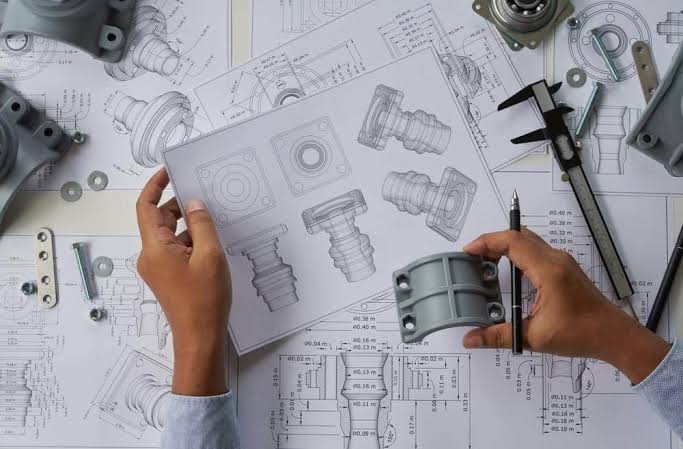
A seemingly minor material decision can determine whether a shaft, gear, pin, or coupling delivers years of dependable service or causes expensive downtime. For example, a shaft may have enough static strength to resist a single twist but still fail after repeated torsional cycles. When comparing chromium-molybdenum bar stock for demanding components, 4150 alloy steel is one option to evaluate alongside the part’s full operating requirements.
Specialty Steel Company, a Cleveland, Ohio-based distributor serving industrial buyers across North America and in export markets, provides an overview of alloy steel products, covering grades, bar-stock formats, hardness ranges, and traceability considerations. That practical product knowledge is useful when a buyer needs to compare stock for heavy equipment, drive components, or other high-stress applications without treating one grade as the automatic answer.
Why Material Choice Matters
High-stress parts operate in real environments, not ideal test conditions. Vibration, abrasive dust, moisture, impact, temperature changes, poor alignment, and unplanned overloads can all shorten service life. A clean indoor fixture may prioritize dimensional stability and machinability, while an exposed drive component may need greater fatigue resistance, toughness, and corrosion protection.
The Main Types Of Stress On Machine Parts
- Tension: A pulling force that stretches a part.
- Compression: A pushing force that can crush or buckle a component.
- Shear: Force that makes one section slide past another.
- Torsion: Twisting load common in shafts and driveline parts.
- Fatigue: Progressive damage caused by repeated loading cycles.
- Impact: Sudden loading that tests energy absorption before fracture.
Strength, Toughness, And Hardness
These properties work together but are not interchangeable. Strength describes resistance to permanent deformation or fracture under load. Hardness measures resistance to indentation and often relates to wear resistance. Toughness describes the ability to absorb energy before cracking. A very hard part can resist wear well but become harder to machine and more vulnerable to brittle fracture if toughness is inadequate.
How Heat Treatment Changes Performance
Annealing softens steel and can improve machinability. Normalizing refines the structure after forging or hot working. Quenching increases hardness by rapidly cooling the steel, while tempering follows to restore a more usable balance of strength and toughness. Each process can also affect residual stress, distortion, and dimensional stability.
Heat-treatment settings deserve validation rather than assumptions. A 2026 study of EA4T axle steel found measurable relationships among tempering conditions, hardness, tensile strength, and very-high-cycle fatigue performance. The practical lesson is clear: a higher hardness target should be judged against the expected load spectrum and required service life.
How To Compare Alloy Steel Options
Start with service conditions, then compare realistic candidates. Consider the load direction and peak force, the expected number of cycles, the operating temperature, moisture or chemical exposure, the target hardness, the required toughness, and whether the part must be welded, formed, ground, or heat-treated. Also, compare availability, machining time, scrap risk, and total manufacturing cost rather than purchase price alone.
The Role Of Machining And Surface Finish
Sharp corners, deep tool marks, scratches, holes, keyways, and abrupt changes in section thickness create stress concentrations. Under cyclic loading, these locations can become sites of crack initiation. Use generous radii where feasible, control transitions between diameters, and specify a finish appropriate to the fatigue risk.
Hot-rolled stock generally offers wider tolerances and a rougher surface, making it practical when significant machining is planned. Cold-finished stock can provide tighter dimensions and a smoother surface. Ground or turned-ground-polished bar can be useful for precision shafts, but the finish specification should match the component’s actual function and budget.
Why Testing And Traceability Matter
Material documentation connects received stock to its stated chemistry, mechanical properties, and production heat. This information supports inspection, corrective action, and repeatable production when a part later needs to be reproduced or investigated.
- Match the grade to the purchase order.
- Confirm the heat number on the paperwork and material identification.
- Review chemical and mechanical test data.
- Check dimensions, quantity, and surface condition.
- Store records with the project documentation.
A Practical Material Selection Process
- Define the failure risk: Identify whether wear, fatigue, impact, corrosion, or distortion is the primary concern.
- Set performance targets: Establish required strength, hardness, toughness, and service life.
- Review production limits: Account for machining, heat treatment, welding, grinding, and inspection.
- Compare candidates: Review two or three suitable grades, not just one impressive property.
- Validate the choice: Use test data, prototypes, and failure analysis before full production.
Common Questions About High-Stress Materials
Is A Harder Steel Always Better?
No. Greater hardness may improve wear resistance, but the part may also require toughness, ductility, and resistance to crack growth. Geometry and loading conditions determine the proper balance.
Can A Smooth Surface Improve Fatigue Life?
Often, yes. Reducing small surface defects can reduce local stress concentration. However, surface finish cannot compensate for unsuitable material, poor geometry, or improper heat treatment.
Are New Steel Treatments Being Developed?
Yes. Research continues to examine ways to delay crack initiation while preserving useful strength. For example, research on pre-fatigue training for high-strength steel explores a method aimed at suppressing early crack formation under cyclic loading.
Final Considerations
Reliable material selection is a complete engineering decision. Alloy grade, heat treatment, geometry, surface condition, documentation, and manufacturing methods all affect the result. The best choice is rarely the hardest or strongest material on paper. It is the combination of material and process that performs consistently under the actual conditions the machine part will face.