
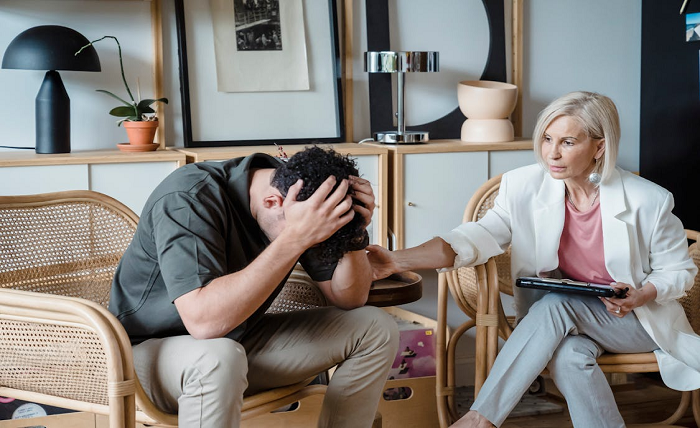
Anxiety and substance abuse are two of the most common struggles people face today.
And here’s the thing… They always seem to go hand in hand. This pairing is known as a co-occurring disorder and is nearly impossible to break free from by yourself.
The good news?
There is hope, and recovery is more than achievable when you get it right.
In this article, we will discuss what co-occurring disorders are, why these two conditions tend to go together, and what recovery looks like.
Let’s get into it…
What’s inside this guide:
- What Are Co-Occurring Disorders?
- Why Anxiety And Substance Abuse Show Up Together
- The Warning Signs You Shouldn’t Ignore
- The Path Toward Healing
- How Loved Ones Can Help
What Are Co-Occurring Disorders?
A co-occurring disorder is when a person has a mental health disorder and a substance use disorder simultaneously.
It sounds simple. But it’s actually a tangled web that affects millions.
SAMHSA’s most recent report says 21.2 million adults had both conditions in the last year. That’s about 34.5% of every adult with a mental illness in the United States. Mind blown?
And anxiety is one of the biggest culprits in this mix.
When anxiety and substance abuse co-exist, they tend to go hand in hand. The anxiety fuels the drinking/drug use. The drinking/drug use worsens the anxiety. It’s a vicious cycle.
And that is precisely why it is critical to have the appropriate dual diagnosis treatment in place. It’s just not effective to treat one aspect and ignore the other. You need a comprehensive approach that addresses both simultaneously.
Disclaimer: Having co-occurring disorders is not a character flaw or weakness. It’s a medical condition. Like diabetes or heart disease, it needs appropriate treatment.
Why Anxiety And Substance Abuse Show Up Together
So why does this happen so often?
It often begins with self-medication. Someone is struggling with chronic anxiety, panic attacks, social phobia… and they realize that a drink or a pill makes it better.
For a little while, it works. But this is where things go sideways.
Slowly, the brain begins to rely on the drug to feel “normal”. The anxiety returns even more powerfully when the drug wears off. So the person uses more. And more. Until they can’t stop.
Throwing gasoline on a fire. In the short term it seems to be making it go away. However, in the long term you are making the problem much worse.
The numbers don’t lie either. Only 9.1% of those with co-occurring disorders actually receive treatment for both conditions. That means most people are left on their own to figure this out.
The Warning Signs You Shouldn’t Ignore
How can you tell if anxiety and substance abuse are happening at the same time? It can be difficult because the symptoms can be similar.
But there are some clear warning signs to watch out for.
Signs of anxiety include:
- Constant worry that won’t shut off
- Trouble sleeping or staying asleep
- Racing heart and shortness of breath
- Feeling on edge all the time
Signs of substance abuse include:
- Needing more of the substance to feel the same effect
- Failed attempts to cut back
- Drinking or using alone or in secret
- Cravings that feel impossible to ignore
When you line these two lists up like this, the correlation is more apparent. If someone is having a cluster of symptoms from both of these lists… Most probably co-occurring disorder. The sooner it’s caught, the higher likelihood of total remission.
The Path Toward Healing
Here’s where things get hopeful.
Recovery from co-occurring disorders is possible. But you have to get the right treatment from the right people at the right time.
Integrated Treatment
This is the best practice standard of care for co-occurring anxiety and substance abuse disorders. Dual conditions are treated concurrently by an integrated team in the same facility.
Why does this matter so much?
Addictions were also treated and anxiety disorders were treated separately with the older methods of treatment. People went to one facility for the addiction and a separate facility for the anxiety. This usually led to relapses as the anxiety was not totally treated.
Integrated treatment changes this completely.
Therapy That Actually Works
Several types of therapy have proven highly effective for co-occurring disorders:
- Cognitive Behavioural Therapy (CBT): Helps reshape negative thought patterns.
- Dialectical Behaviour Therapy (DBT): Builds skills for handling intense emotions.
- Trauma-focused therapy: Addresses past wounds that fuel both conditions.
- Group therapy: Connects people who genuinely understand the struggle.
The key is finding what works for the individual. There is no one-size-fits-all approach.
Medication When Needed
Medication is an important part of the recovery process for some individuals. This can include anti-anxiety medication or other prescriptions that help to stabilise mood and curb cravings.
The key is balance. A good treatment team will track all the relevant stuff, and tweak as needed to prevent medications from causing problems of their own.
Building a Strong Support System
Recovery is not a one-person job. Developing a support system is one of the most valuable actions a person can take.
This means:
- Connecting with peers in recovery
- Leaning on trusted family and friends
- Working with a sponsor or mentor
- Joining support groups regularly
The more people in your corner, the better.
How Loved Ones Can Help
Watching someone you care about struggle with anxiety and drug use is difficult. It can leave you feeling unsure of what to do, but there is much that can be done.
First, learn about co-occurring disorders. The more knowledge gained about what your loved one is facing, the better equipped anyone will be to help.
Don’t judge. The person is already at war with themselves. Shame is the last thing they need on top of it.
Most importantly… Take care of yourself too. You can’t pour from an empty cup.
Bringing It All Together
Co-occurring disorders like anxiety and substance abuse are tough. There’s no sugar coating that.
But they aren’t a life sentence either.
With the right treatment, a good support system, and work… People get better from this every day. The trick is asking for help and not white knuckling it. Long story short:
- Co-occurring disorders affect millions of people every year
- Anxiety and substance abuse often feed off each other
- Integrated treatment gives the best chance of full recovery
- Therapy, medication, and support all play important roles
- Loved ones can make a huge difference with the right approach
Recovery is a process. There will be good days and bad days. But every step you take is progress and the right treatment can make all the difference.